-
WhatsApp +86 15116118247
-
Any Questions info@terrahats.com
Why Custom Straw Hat MOQ Changes by Style and Color
Learn why custom straw hat MOQ changes by style, color, material, logo method and packaging—and what to confirm before requesting a quote.

A custom straw hat MOQ may be assessed at the level of the smallest production-relevant configuration—not only the total number of hats on a purchase order.
If an order combines several styles, colors, sizes, decoration methods, labels, or packaging versions, the supplier first needs to understand how the total quantity is allocated. Some elements may share preparation, while others may require separate material planning, setup, approval, or packing.
For buyers who need custom hat MOQ explained in practical terms, the central question is:
How many units belong to each version that must be produced or packed separately?
This does not mean every variation automatically has its own MOQ. The applicable MOQ is confirmed only after the selected style, materials, color split, customization, size mix, packaging, and delivery requirements are reviewed.
Consider an illustrative 600-piece inquiry. It could describe one 600-piece production version, or six color versions of 100 pieces each. The purchase-order total is identical, but the material allocation, color approval, decoration compatibility, labels, and packing requirements are not. The example does not imply a 100-piece or 600-piece MOQ; it shows why the quantity split must be reviewed before a minimum can be confirmed.
Four questions reveal whether configurations may be reviewed together:
- Can they use the same hat body or material batch?
- Can they use the same decoration setup?
- Can they use the same labels, trims, and packaging components?
- Can they be planned, identified, and packed as the same production version?
A “no” or “not yet confirmed” answer may trigger a separate quantity review. There is no universal rule for combining styles or colors under one MOQ; the quotation should state exactly which configurations are grouped together.
Table of Contents
How MOQ May Be Allocated
The following table is a quotation-planning framework, not a fixed TerraHats policy or a universal industry rule.
| Order configuration | What may be shared | What still needs confirmation | Buyer input |
|---|---|---|---|
| One style, one available color, one logo | This configuration may share the greatest number of production settings | Material availability, decoration compatibility, size mix, labels, packaging, and current order conditions | Style specification, total quantity, size split, artwork, and packing method |
| One style, several colors, same logo | The source artwork may be reusable | Availability by color, material or color-batch requirements, and logo appearance on each background | Quantity per color, color references, and logo colors |
| Several styles, one artwork | The original vector artwork may be shared | Logo size, placement, surface shape, attachment method, and decoration setup for each style | Quantity, dimensions, placement, and reference image for every style |
| Custom color or custom weave | Some design elements may remain consistent | Material sourcing, development, sampling needs, batch approval, and quantity allocation | Target color or swatch, material direction, and quantity per version |
| Private-label or retail-ready packing | The base hat design may remain unchanged | Minimums for labels, size tags, inserts, and packaging components | Component artwork, SKU matrix, quantity, and packing specification |
| Exact reorder | Approved files or specifications may be reusable | Current materials, color batches, component availability, packaging, and construction feasibility | Previous PO, approved specification, artwork, and packaging reference |
1. Hat Style and Body Construction
“Straw hat” is a product category, not a standardized production unit.
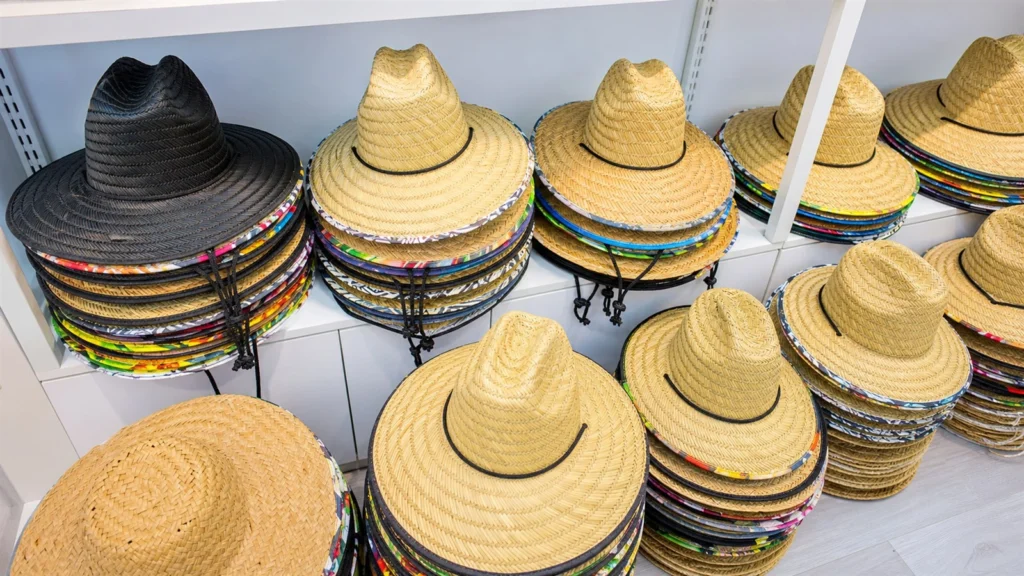
Mat straw, rush or cattail straw, hollow straw, and mixed-weave bodies can involve different materials and construction requirements. Crown shape, brim width, edge treatment, reinforcement, and attachment details may also affect whether two styles can be planned together.
For example, a brim-bound style adds a component and attachment step that a raw-edge design does not have. A chin cord may require hardware or attachment points absent from the base hat. Even when both hats carry the same logo, their production-relevant configurations may differ.
An RFQ should therefore assign a quantity to each distinct style. Reference images help communicate the design direction, but dimensions and annotated drawings give the supplier a clearer basis for evaluating whether any preparation can be shared.
Buyers can review possible starting points on the wholesale hats page before separating existing-style options from fully custom developments.
2. Material and Weave Selection
Different straw bodies, blends, gauges, and weave structures may follow different sourcing or preparation routes.
An available material in a current construction may require less development than a custom weave, but availability alone does not guarantee that configurations can share one MOQ. The selected style, color, decoration, and quantity allocation still need review.
A custom material or weave direction may involve decisions about:
- Strand or yarn composition
- Weave density and appearance
- Flexibility and hand feel
- Compatibility with the intended hat shape
- Color consistency across the planned batch
- Suitability for the selected decoration
These details should be defined as part of a specific configuration. Asking only for “the MOQ for a straw hat” can produce an answer that no longer applies once the material, weave, or construction changes.
3. Color Splits and Batch Planning
Color is a common reason the purchase-order total needs to be broken down for MOQ review.
One style in one available color may share more production conditions than the same quantity divided among several colors. However, neither of the following assumptions is safe:
- Every color must always meet a separate MOQ.
- All colors can always be combined under one MOQ.
The supplier needs to review the source and availability of each color, the relevant material batches, and the requested quantity allocation.
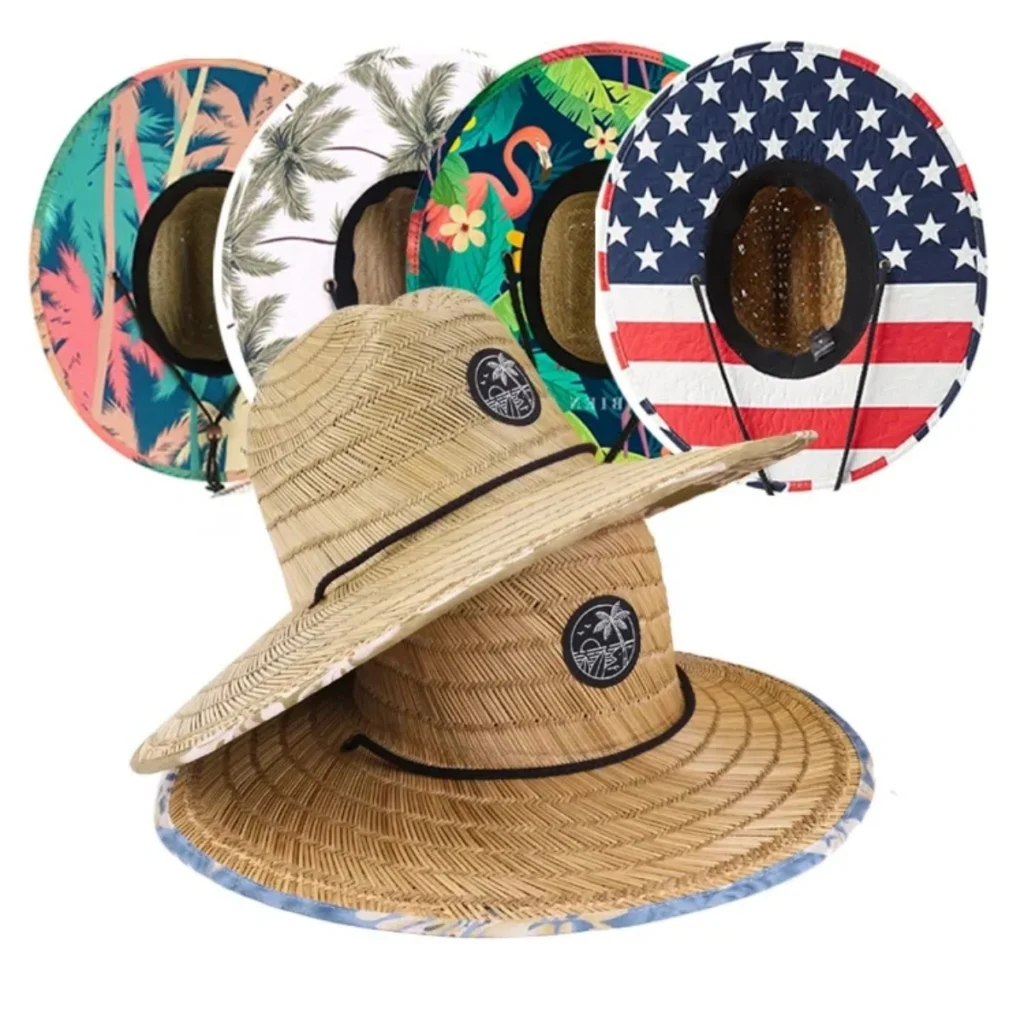
A custom color can add color development and approval requirements. A color reference must be translated onto the actual straw body, and the substrate, weave, finish, and viewing conditions can affect its appearance. Pantone textile systems support standardized color communication, while color-management systems such as Datacolor help evaluate consistency. Neither replaces approval on the intended material.
For each color, state:
- Whether it is available or custom
- The reference code or physical swatch, where applicable
- The requested quantity
- Whether the logo colors remain unchanged
- Whether trims or packaging must coordinate with the hat
- Who will approve the production-relevant color reference
A multi-color assortment should be presented as a visible allocation, not only as one total quantity.
4. Artwork and Decoration Method
The same logo does not always mean the same production setup.
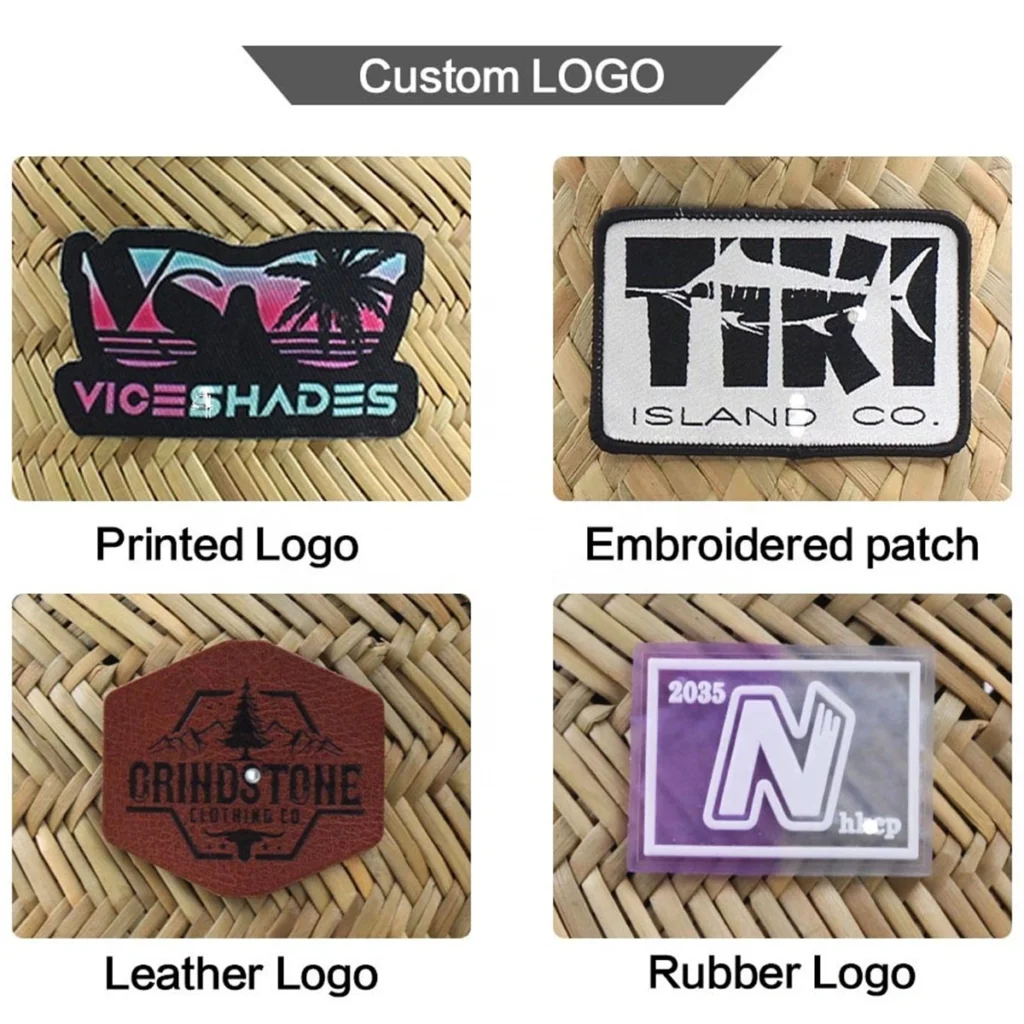
Embroidery, screen printing, heat transfer, under-brim printing, and patch applications interact differently with a hat surface. Leather, rubber or PU, fabric, and embroidered patches also need to be reviewed for their dimensions, attachment, and compatibility.
Relevant variables include:
- Decoration method
- Logo dimensions
- Number and location of applications
- Crown or brim curvature
- Artwork detail
- Patch material and attachment method
- Background color and required contrast
An existing embroidery file does not automatically remove the need for setup review or sampling. Embroidery files contain production instructions, and changes in size, placement, surface, or construction may require adjustment. A print design may likewise need separate evaluation when moved from a crown to an under-brim position.
Not every straw surface is compatible with every decoration technique. Send the artwork, dimensions, placement, and preferred method together so the complete application can be assessed.
The customization overview and guide to custom straw hats with a logo can help buyers organize these specifications.
5. Labels, Trims, and Packaging Components
A finished-hat quantity and a component quantity are not always evaluated in the same way.
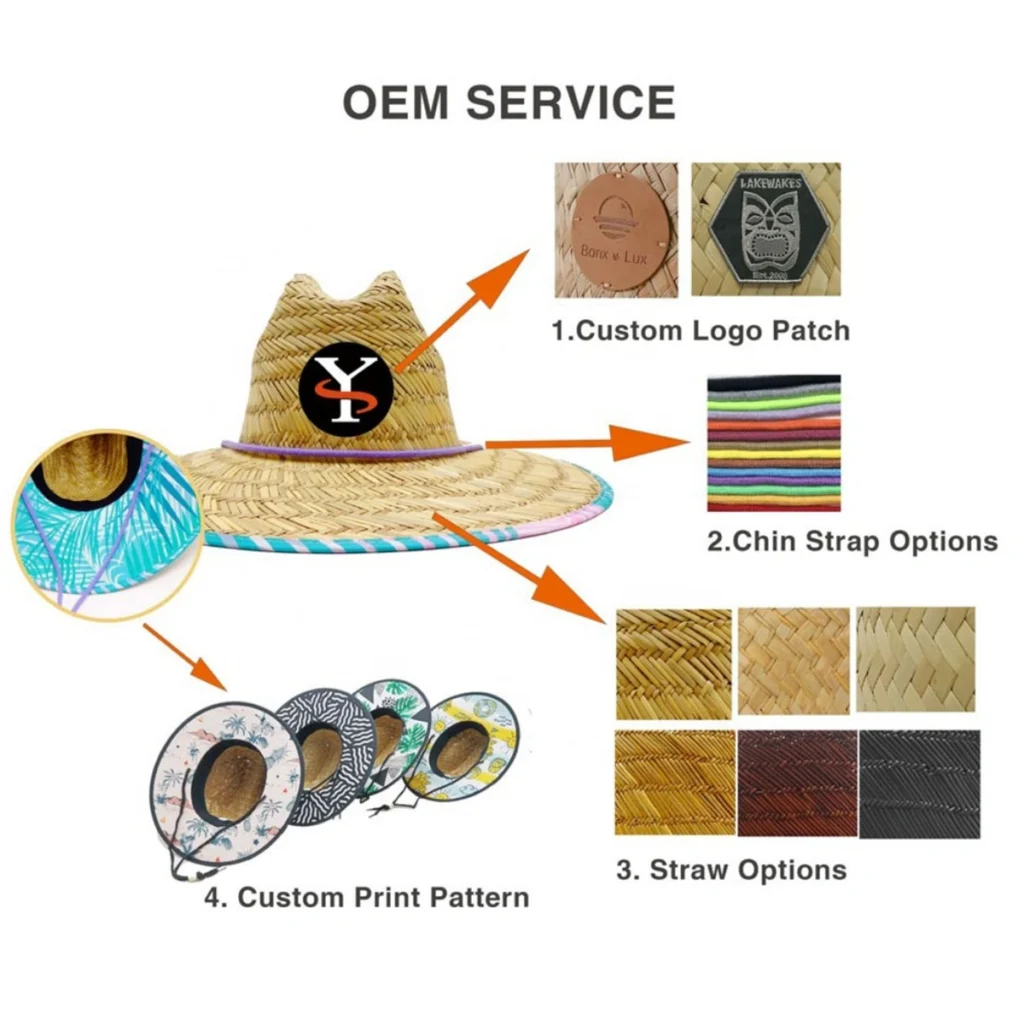
Private-label programs may include woven or printed labels, size tags, branded sweatbands, chin cords, patches, hangtags, stickers, inserts, polybags, cartons, or retail-ready packaging. A supplier for one of these components may apply a minimum that differs from the hat-body quantity.
This becomes especially relevant when one base hat is divided into several brand, size, market, or retail-channel versions. Different labels or printed packages create separate component allocations even if the hat body remains unchanged.
Surplus components may be held for a later order if this is agreed in advance. Buyers should not assume that unused labels, patches, or packaging will automatically be stored, reused, or credited.
Mark every component as:
- Common to the full order
- Different by style
- Different by color
- Different by size
- Different by market or sales channel
See the private-label straw hats page for brand elements that may need to be specified.
6. Size Mix and SKU Structure
A commercial order may contain several sellable size and color variants.
Depending on the construction, a size split may affect patterns, blocks, labels, packaging, or inventory identification. A separate SKU, however, does not automatically mean a separate manufacturing MOQ. SKU identification and production grouping answer different questions.
GS1 guidance treats products that differ by size or color as distinct trade items for identification purposes. This helps explain why one assortment can contain many SKUs, but it does not establish a factory MOQ rule.
Provide the quantity for every style-color-size combination. If the product is adjustable or intended as a single-size offer, state that clearly. Include every required size tag, retail barcode, and packaging variation in the allocation.
Stock Options, Custom Developments, and Reorders
An existing or stock-inspired hat body may reduce new development, but it does not guarantee a lower MOQ. Color, decoration, labels, sizes, packaging, and current availability still influence how the order is grouped.
A custom body, weave, color, or component may introduce separate sourcing, approval, or production requirements. Buyers planning a new specification can consult the sample policy to understand how it may be evaluated.
For an exact reorder, provide the previous purchase order, approved specification, artwork, and packaging references. Existing information may be reusable, but current materials, batch color, components, construction, and delivery requirements still need confirmation.
“Same as last time” is a useful reference—not a complete quantity allocation.
Custom Straw Hat RFQ Checklist
Use this checklist to make the MOQ review configuration-specific:
- Hat style, construction, material or weave
- Brim and crown dimensions
- Available or custom color, with a reference where applicable
- Quantity by style, color, and size
- Logo artwork in an editable vector format, where available
- Decoration method, dimensions, and placement
- Patch material and attachment method, if applicable
- Brim binding, chin cord, and other trims
- Labels, size tags, hangtags, barcodes, and inserts
- Individual, master-pack, and retail-ready packaging requirements
- Destination and delivery requirements
- Previous order reference for a reorder
- Clear indication of acceptable alternatives
What the Quotation Should Confirm
A useful quotation should make the allocation visible. Ask it to identify:
- The level at which MOQ is being reviewed and which configurations can be grouped together
- Whether decorations or private-label components follow conditions different from the hat-body quantity
- Which design changes could simplify the allocation, or which reorder details must be reconfirmed
This turns “What is your MOQ?” into a comparison of defined production versions rather than unexplained order totals.
Frequently Asked Questions
Is custom straw hat MOQ always per color?
No. Color may affect MOQ allocation, but each color does not automatically carry a separate MOQ. The supplier must review color availability, material batches, style, decoration, and the requested quantity per color.
Can several hat styles share one MOQ if they use the same logo?
Possibly, but shared artwork alone is not enough to decide. Each style may require a different logo size, placement, surface adjustment, or attachment method. Submit quantities by style for review.
Does using a stock style guarantee a lower MOQ?
No. An existing body may reduce some development work, but current availability, colors, decoration, labels, sizes, and packaging still matter.
Can an existing embroidery file be used for a reorder?
It may be reusable, depending on the file, logo size, placement, hat surface, and current construction. Reuse does not automatically eliminate setup review or sampling.
Plan the Allocation Before Requesting a Quote
The clearest MOQ discussion begins with a quantity matrix, not a single total. Map every style, material, color, decoration, size, label, and packaging version, then identify which elements are shared.
Download the MOQ & Cost Planner
Use the worksheet to organize the allocation and outstanding questions. For a configuration-specific review, contact TerraHats.
MOQ and wholesale pricing are confirmed after the selected hat style, materials, quantity split, customization, size mix, packaging, and delivery requirements are reviewed.
Sources and Further Reading
These references provide background on color communication, embroidery properties, and product-variant identification. They do not establish TerraHats MOQ policies: