-
WhatsApp +86 15116118247
-
Any Questions info@terrahats.com
Why Custom Straw Hat Prices Vary Between Orders
See why custom straw hat prices vary with material, construction, branding, quantity, packaging, inspection and shipping scope.

Custom straw hat prices vary because a quotation covers more than a hat shape. Material, construction, branding method, order quantity, SKU split, packaging, sampling, inspection scope and shipping terms can all change the work or commercial responsibility included. The practical rule is simple: two unit prices are comparable only when the product scope and commercial terms match.
For brands and wholesale buyers, this distinction matters during both the first quotation and repeat orders. A lower-looking number may exclude a logo application, retail-ready packing, project-specific inspection or a comparable delivery scope. A repeat-order quotation may also need to change if the specification, quantity mix, quoted responsibilities or other confirmed inputs differ from the previous order.
This guide explains the main custom straw hat cost factors and shows how to normalize quotations before making a sourcing decision.
Table of Contents
Quick answer for buyers
A custom straw hat price belongs to a defined order scope—not permanently to a style name. Before comparing two quotations or questioning a repeat-order change, align these items:
- Material and construction
- Logo method, size and placement
- Total quantity and quantity per SKU
- Labels, packaging and carton configuration
- Sampling and inspection scope
- Incoterm, named place and freight basis
- Currency, validity, inclusions and exclusions
Quote-normalization table
Use this table to place competing quotations on the same basis before evaluating the unit price.
| Field | Why it affects comparability | What the buyer should confirm |
|---|---|---|
| Material | Broad “straw” descriptions can cover different materials or mixed weaves | Exact material or blend, color, appearance and approved reference |
| Construction | Shape, dimensions, edge finish, reinforcement and internal components can change the build | Crown, brim, sizing, weave or construction, trims, sweatband and finishing |
| Logo method | Decoration processes can require different components and applications | Method, material, artwork, size, colors, position, attachment and number of placements |
| Total quantity | The quoted volume may change the supplier’s production basis | Total units and whether alternatives are separate scenarios |
| SKU split | The same total may require different setups when divided across variants | Units by style, color, size and logo version |
| Labels and packaging | Hangtags, barcodes, inserts, polybags and carton marks may be included or excluded | Every component, artwork or data responsibility, packing method and carton configuration |
| Sampling | Development stages and revisions may not have the same scope | Sample type, included revisions, approval reference and shipping responsibility |
| Inspection | Vague inspection language can conceal different checking and reporting scopes | Written stage, responsible party, checks, report, acceptance requirements and separate charges |
| Incoterm and named place | Different responsibility boundaries include different tasks, costs and risks | Incoterm rule, named place and version |
| Freight basis | Pack-out, routing and mode can change the logistics comparison | Mode, route assumptions, carton data, courier or air-parcel chargeable-weight basis where applicable, and the rating basis for other modes |
| Currency and payment terms | Commercial conditions can make two headline unit prices economically different | Currency, payment schedule and any separately quoted charges |
| Quote validity and exclusions | An expired quote or unstated exclusion may not represent the current project | Validity date, assumptions, exclusions and changes that require confirmation or requotation |
A practical comparison: same total quantity, different scope
Consider two hypothetical inquiries with the same total number of hats. No price is assigned because the supplier still needs to quote the actual specification and current commercial terms.
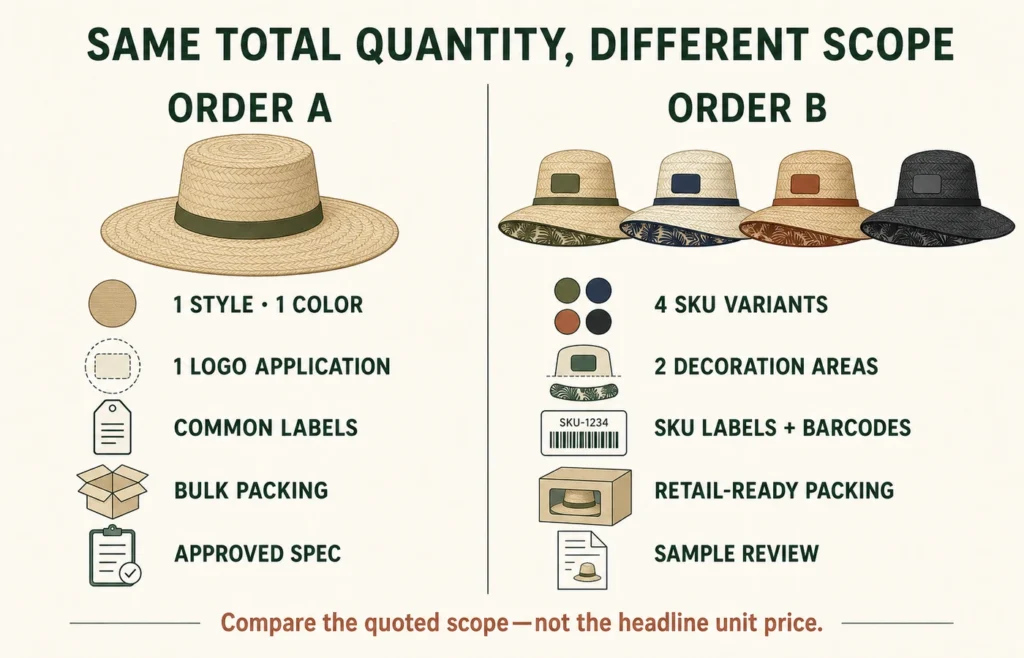
| Order A | Order B |
|---|---|
| One style and one color | One style divided across four colors and sizes |
| One existing logo application | A front patch plus printed under-brim artwork |
| Common labels and standard bulk packing | SKU-specific labels, barcodes and retail-ready packing |
| Approved specification reused without change | Revised construction requiring sample review |
| One defined inspection and delivery scope | Inspection, reporting and delivery scope still pending |
Order B is not automatically “more expensive,” and no universal surcharge can be inferred. It does, however, contain more production-relevant configurations and unresolved inputs. The supplier must evaluate which preparation, components and approvals can be shared and which need separate treatment. Until those fields are confirmed, a unit-price comparison with Order A would not be like for like.
1. Material is not one interchangeable input
“Straw hat” describes a product category, not a single material specification. A project may use mat, rush/cattail, hollow or mixed-weave material, and each option can require a different sourcing, development or production basis.
Buyers should confirm more than the general material name. The quotation should identify the agreed material or blend, color, surface appearance and any sample or reference used for approval. If two suppliers have quoted different constructions under the same broad description, their unit prices do not represent the same product scope.
Material choice may also affect how the hat holds its intended crown and brim, which decoration methods are suitable and how the finished product needs to be packed. Material decisions should therefore be evaluated as part of the complete specification rather than as an isolated line item.
2. Construction can change the work included
Two hats made from similar material can still require different production processes. Relevant construction details may include:
- Crown shape and dimensions
- Brim width, shape and edge finish
- Weave or panel construction
- Reinforcement and shaping requirements
- Sweatband and internal finishing
- Decorative bands, trims or other components
- Size structure and fit requirements
Even a small-looking design change can alter the required cutting, forming, assembly or finishing scope. A quotation based on a reference photo alone may therefore leave important assumptions unresolved.
A better approach is to provide a specification sheet, reference sample or approved development sample. The supplier can then quote the intended build rather than an interpretation of the visual concept. If the approved construction changes later, ask whether the project needs requotation.
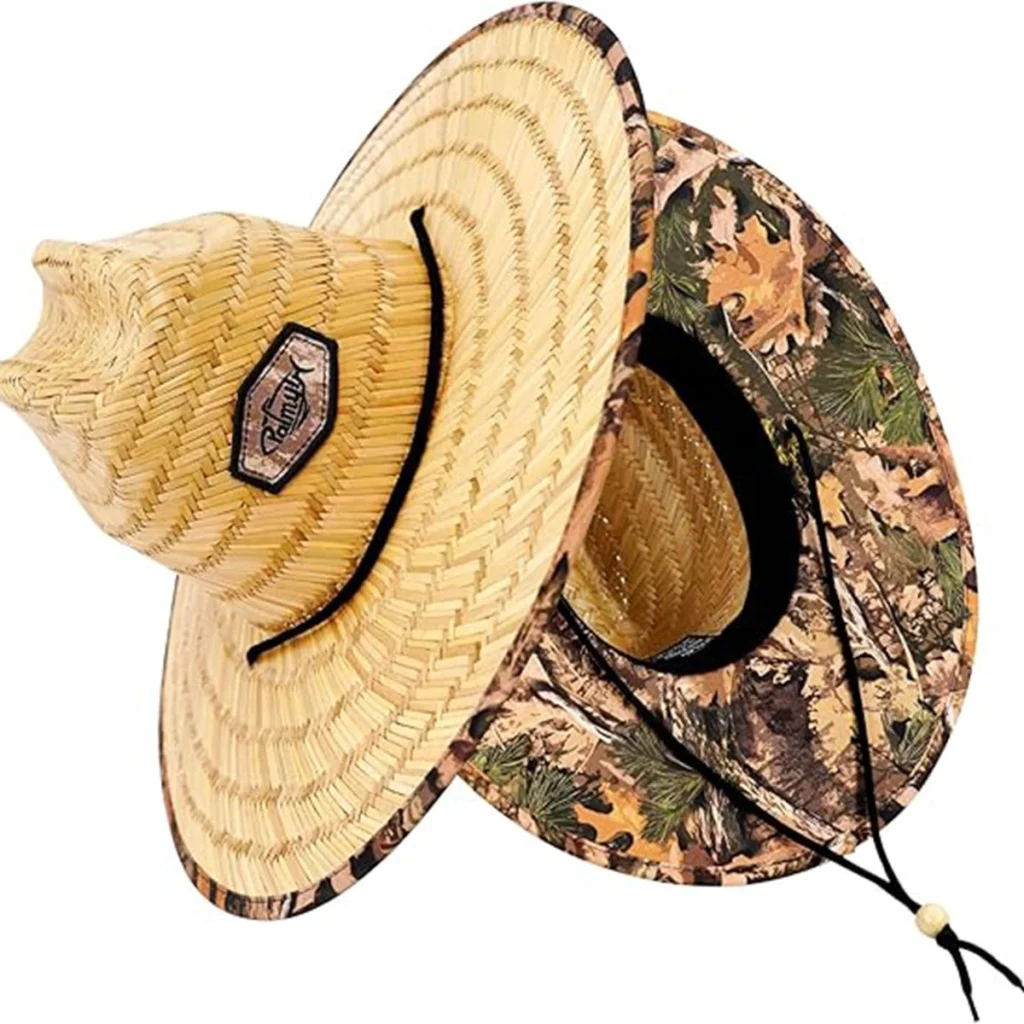
3. Logo method can change the production process
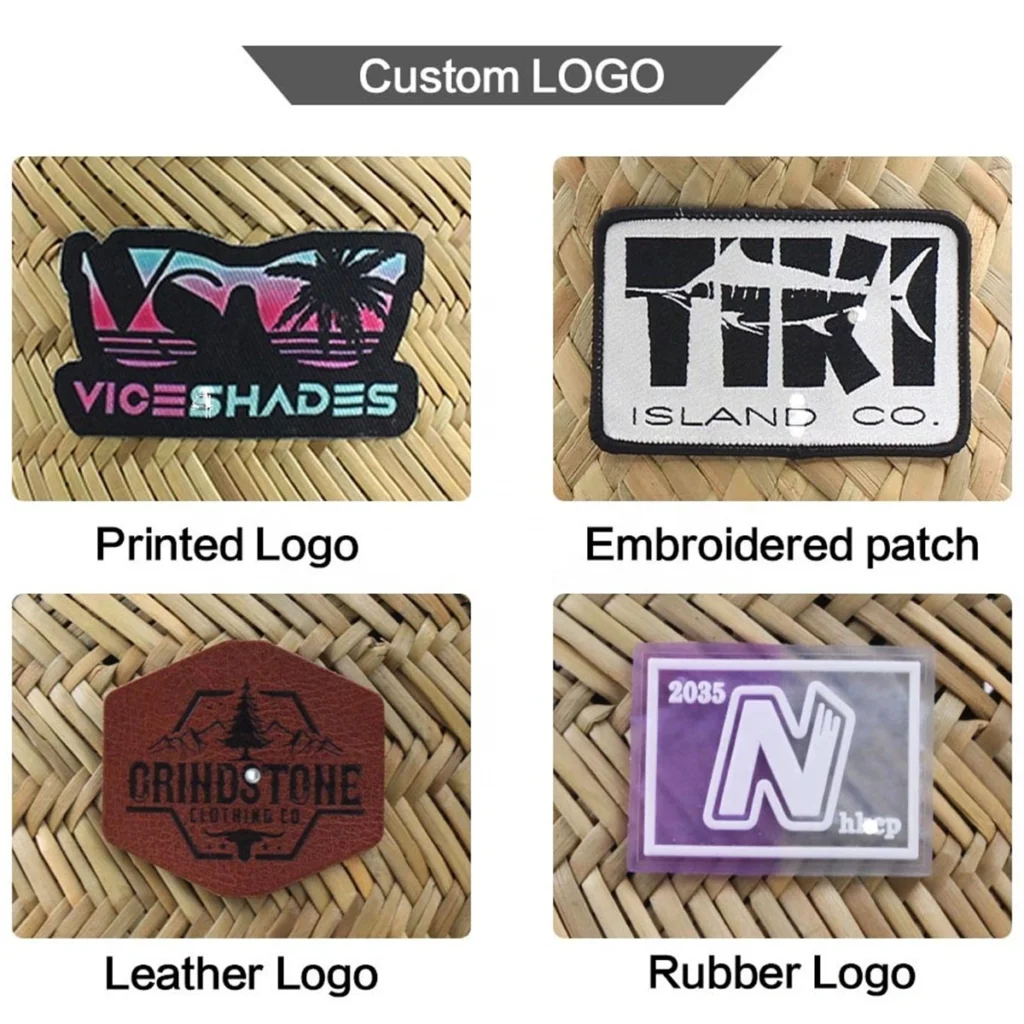
Branding is another frequent reason custom straw hat quotations vary. Possible methods include leather, rubber/PU, fabric or embroidered patches; direct embroidery; screen printing or heat transfer; and digital or sublimation applications.
Each method can follow a different production path. Relevant variables may include patch material, artwork complexity, application position, attachment method, number of placements and compatibility with the hat construction.
There is no universally cheapest logo method for every design. A simple mark and a detailed multicolor design may suit different processes, while some crown or brim structures may limit where a logo can be applied consistently. Buyers should compare quotations using the same artwork file, dimensions, colors, placement and application method.
For an overview of available options, see custom hat customization.
4. Quantity and SKU split must be read together
Total order quantity is only one part of the production picture. How that quantity is divided across styles, colors, sizes and logo versions may also change the quoted scope.
For example, one consolidated style is not operationally identical to an order with the same total units split across many SKUs. Each variation may require separate material allocation, production setup, identification, packing or carton marking. Buyers should not compare a consolidated quotation with a highly fragmented assortment as though both orders had the same scope.
When requesting a quote, provide both:
- Total order quantity
- Quantity by style, color, size and branding version
If the assortment is still being planned, the MOQ & Cost Planning Worksheet can help organize the variables before inquiry.
5. Packaging can change product and freight scope
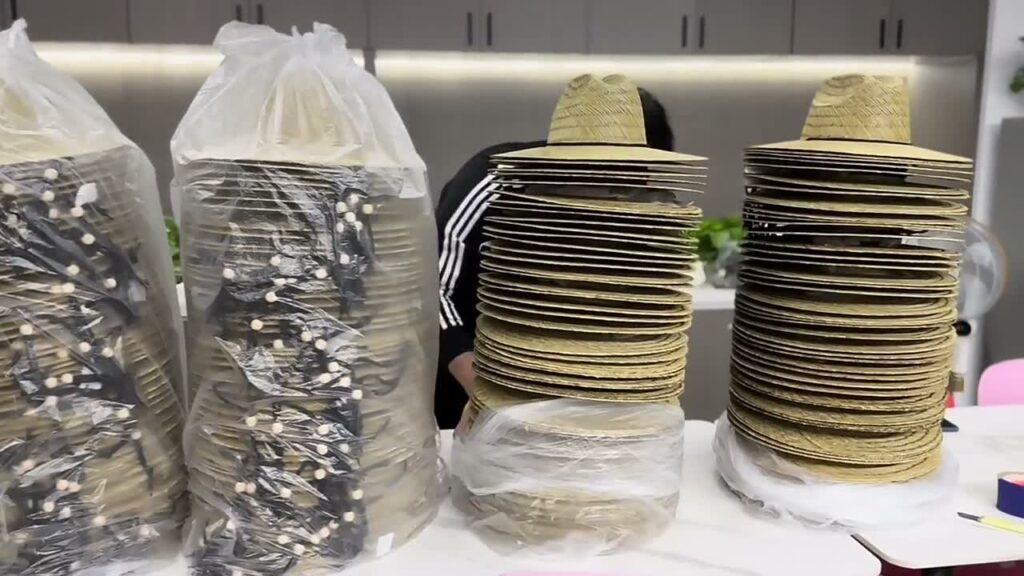
Packaging is often discussed late, even though it may include several components: labels, hangtags, barcodes, inserts, polybags and carton marks. Retail-ready or distribution-ready requirements should be stated at the quotation stage, including who will supply the artwork and data.
Packaging may also change the logistics basis. For courier and air-parcel services, carriers may calculate chargeable weight using dimensional weight when a shipment occupies more space relative to its actual weight. Both DHL and FedEx explain this principle. Other freight modes use their own weight, volume and commercial-rating rules, so dimensional-weight guidance for parcel services should not be generalized to every sea-freight quotation.
Because straw hats may need protection against brim distortion, crown damage or compression marks, packing configuration can become part of the landed-cost discussion rather than merely a presentation choice. Confirm the actual pack-out and shipping basis instead of assuming that a more protective format will always produce a specific price change.
Before comparing offers, confirm the individual packing method, units per carton, carton dimensions, gross weight, carton-mark requirements and whether the proposed configuration reflects the approved product shape. Ask for requotation if the final pack-out differs from the basis originally quoted.
6. Sampling is a development scope
Sampling helps turn a concept into an agreed manufacturing reference. Its written scope may cover material selection, color review, construction development, logo execution, fit or sizing review, packaging confirmation and revision rounds.
Quotations can differ depending on the sampling work they include. Buyers should confirm:
- Which sample stage is being quoted
- What specifications and artwork the sample will follow
- Which revisions, if any, are included
- How additional revisions would be quoted
- How sample shipping is handled
- What written approval establishes the production reference
An approved sample can reduce ambiguity, but it does not replace the need for a written production specification. If a product, decoration or packaging requirement changes after approval, confirm whether a new sample or revised quotation is needed. TerraHats’ sample policy provides additional context for planning development.
7. Inspection scope needs a common definition
“Inspection included” is not precise enough for quote comparison. The required scope is project-specific and should be confirmed in writing: what will be checked, when checks will occur, who is responsible, how findings will be reported and what acceptance requirements apply.
The commercial question is not whether inspection automatically adds a particular amount. It is whether both quotations cover the same inspection and reporting scope—or whether one leaves some work outside the offer.
Buyers should clarify:
- Inspection stage and responsible party
- Product attributes or documents to be checked
- Reporting format
- Agreed acceptance requirements
- Process if findings require review or corrective action
- Any separate inspection, testing or reporting charges
This creates a clearer basis for supplier coordination and internal purchasing approval. Inspection terms should not be inferred from general quality language; if the required scope changes, request written confirmation and, where applicable, requotation.
8. Incoterms define different responsibility boundaries
A quoted unit price does not show the full commercial picture unless the Incoterm, named place and applicable rule version are stated. Incoterms® rules allocate defined delivery tasks, costs and risks between seller and buyer; they do not make differently scoped quotations automatically comparable.
A quote covering goods at one responsibility point should not be compared directly with a quote that includes additional transport or delivery obligations. Buyers should also avoid using an Incoterm without the named place, because the location is part of the commercial definition.
Incoterms® rules do not by themselves determine payment terms, transfer of ownership, product specifications, quality requirements or remedies for nonconforming goods. Those matters need to be addressed separately in the quotation, purchase order or sales contract.
The ICC Incoterms® rules and its Incoterms® 2020 checklist are the authoritative references. The quotation and purchase order should use the agreed rule, named place and version consistently.
Why can a repeat order have a different price?
A repeat order is not automatically the same commercial event as the previous purchase order. The quoted scope may change when any part of the order basis changes, including:
- Material, color or construction specification
- Artwork, logo method or placement
- Total volume or SKU distribution
- Labels, barcode data or packing configuration
- Sampling or approval needs after a product change
- Inspection and reporting scope
- Incoterm, named place, freight basis or route assumptions
- Currency, payment terms, quotation validity or current input conditions
None of these factors implies a predetermined increase. A change may affect the quoted scope in different ways, and the supplier needs to assess the complete current order before confirming a revised price.
Even when the design appears unchanged, ask the supplier to identify the basis of the new quotation and explain any difference from the previous order. The correct comparison is previous scope versus current scope—not previous unit price versus current unit price in isolation.
A useful repeat-order request includes the previous purchase-order reference, approved sample or specification version, current quantity breakdown and a list of requested changes. This gives the supplier a clear baseline for confirming what remains unchanged and what needs requotation.
What a custom straw hat quotation should confirm
A decision-ready quotation should state:
- Product reference and specification version
- Material and construction basis
- Logo method, artwork reference, dimensions and placement
- Total quantity and SKU-level breakdown
- Included labels, hangtags, barcodes, inserts, polybags and carton marks
- Sampling and revision scope, where applicable
- Inspection, reporting and acceptance scope
- Incoterm, named place and applicable version
- Freight or shipping assumptions, if included
- Currency, payment terms and quotation validity
- Explicit exclusions and conditions that would require confirmation or requotation
If any field is missing, request clarification before using the figure in an internal cost comparison.
Buyer checklist before comparing quotations
- Send the same tech pack, artwork and reference files to each supplier.
- Confirm the exact material or mixed-weave specification.
- Match crown, brim, sizing, trim and finishing details.
- Match logo method, size, colors, placement and attachment.
- Provide total quantity and the complete SKU split.
- List every labeling, barcode, insert and packaging component.
- Define sample stages, revision responsibility and approval reference in writing.
- Define the project-specific inspection, reporting and acceptance scope in writing.
- Match the Incoterm, named place and rule version.
- Compare freight assumptions and the actual pack-out on the same basis.
- Check currency, payment terms, validity and exclusions.
- For repeat orders, identify changes from the previous approved scope.
- Ask which changes, if any, require a new sample or requotation.
Frequently asked questions
Why is one custom straw hat quote much lower than another?
The lower quote may be based on a different material, construction, logo process, SKU mix, packaging format, inspection scope or delivery responsibility. Ask both suppliers to complete the same quote-normalization fields before deciding which offer is genuinely lower on a like-for-like basis.
Does a larger total order always reduce the unit price?
No automatic price result should be assumed. Total volume is only one factor, and an order split across multiple styles, colors, sizes or logo versions can have a different production basis from one consolidated SKU. Provide both the total quantity and quantity per variation, then request a project-specific quotation.
Which logo method is the most cost-effective?
It depends on the artwork, size, colors, placement, hat construction and desired appearance. Leather, rubber/PU, fabric or embroidered patches; direct embroidery; screen printing or heat transfer; and digital or sublimation methods should be evaluated against the same design brief. The supplier needs the approved details before confirming the suitable method and quotation.
Should sampling be included in the production price?
Do not assume it is included or excluded. Sampling is a defined development scope, so the quotation should state the sample stage, included revisions, approval basis, shipping responsibility and any separately quoted work.
Why did my repeat-order quote change if the hat looks the same?
A visual match does not confirm that the commercial scope is identical. Quantity split, packaging data, inspection scope, shipping terms, currency or other quoted inputs may have changed. Ask for a line-by-line comparison against the previous approved specification and order terms, plus written confirmation of any item that needs requotation.
Can I compare quotations under different Incoterms?
Only after normalizing the different responsibility boundaries and included costs. Confirm the Incoterm, named place and version, then compare the costs and obligations that fall outside each quotation. Review payment terms, ownership transfer and quality requirements separately because Incoterms® rules do not determine them.
Plan the scope before requesting the price
The most reliable way to evaluate custom straw hat pricing is to make every quotation answer the same question. Define the product, branding, assortment, packaging, quality scope and delivery boundary first; then compare price.
Download the MOQ & Cost Planning Worksheet to organize your quantity and scope assumptions. You can also explore TerraHats’ wholesale hats and private label straw hats, or contact TerraHats with your specification and SKU plan for a project-based quotation.
Sources and Further Reading