-
WhatsApp +86 15116118247
-
Any Questions info@terrahats.com
Why Straw Hats Should Not Automatically Claim UPF 50+
A wide brim can provide useful shade, but that visible benefit is not the same as a tested UPF rating. Buyers should define the claim, its scope and the required evidence before approving UPF 50+ wording.

A straw hat can create visible shade. That does not automatically make it a UPF 50+ product.
This distinction matters when a brand, importer or private-label seller prepares a product page, hangtag, package or wholesale catalog. “Wide brim” and “helps shade the face” describe observable design features. “UPF 50+” is a numerical performance claim that should be supported by evidence applicable to exactly what is being marketed: a material, a liner or the finished hat.
The sourcing rule is simple:
Physical shade is a design observation. A numerical UPF rating is an evidence claim.
Weave, brim size, color and lining may influence the design. None, by itself, proves UPF 50+.
Table of Contents
What UPF 50 Means—and What It Does Not
Ultraviolet Protection Factor (UPF) describes how much erythemally weighted ultraviolet radiation passes through a tested material. A UPF value of 50 corresponds to approximately 2% transmission, or approximately 98% blocked, under the applicable test conditions. It is not a promise that a hat blocks all UV radiation in every wearing situation.
Test methods and product standards serve different purposes:
- AATCC TM183 measures UV transmission through fabric: how to test.
- ASTM D6544-25 defines textile preparation and simulated exposure before UV-transmission testing: how to prepare the test sample.
- ASTM D6603-19 addresses labeling of UV-protective textiles: how to label.
One test name, one headline number or one component report is therefore not a universal finished-product approval. The proposed wording, destination market, tested sample, preparation procedure and production construction must align.
In Australia and New Zealand, the current designation is AS/NZS 4399:2020, Sun protective clothing—Evaluation and classification, incorporating Amendment 1:2025. ARPANSA explains that material UPF testing does not assess the design or body coverage of the finished product. Under its sun-protective classification framework, hat coverage also matters; caps and visors do not satisfy the relevant hat-design criteria. See ARPANSA’s guidance on sun-protective clothing and hats.
Three Different Claims Buyers Must Keep Separate
1. Physical shade from the hat’s shape
A brim may shade parts of the face, ears or neck depending on its width, profile, wearing angle and the sun’s direction. Measurements, photographs and an approved sample can support this design statement; they cannot establish a UPF value.
Claim-safe wording includes:
- “The wide brim helps shade the face, ears and neck.”
- “Designed with an extended brim for additional physical shade.”
- “Brim dimensions are subject to the approved sample.”
Do not turn these observations into “UPF 50+,” “98% UV protection” or “certified sun protection.”
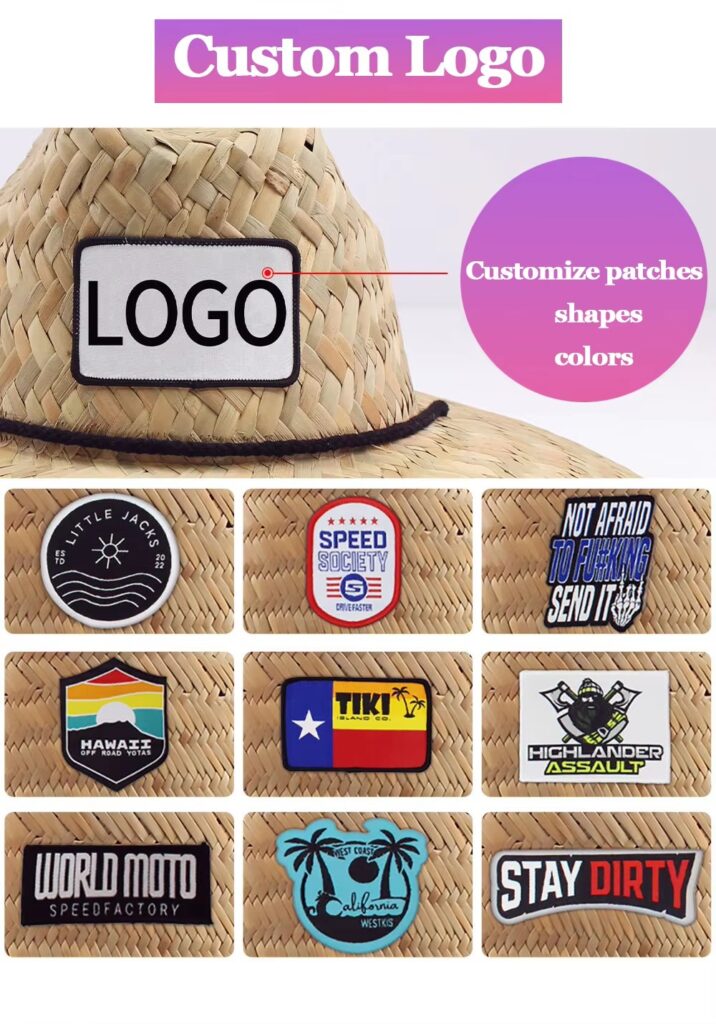
2. A tested material or under-brim liner
A fabric or liner may have a UV-transmission test result. That evidence is useful only within its documented scope. Buyers should confirm:
- The exact material, construction, color and finish tested
- The method, preparation procedure, reported result and limitations
- Whether the production component matches the tested sample
- Whether the report covers one liner, several components or something else
- Any restrictions involving batches, care, stretch, wetness or use
ARPANSA notes that a material report does not evaluate finished-product design and that results apply to the tested sample. Do not extend a result to other colors, batches or materials without an appropriate technical basis.
When documentation supports it, wording such as “the specified under-brim fabric was tested to the stated method” can keep the scope clear. It does not mean the straw crown, straw brim, unlined areas or finished hat received the same result.
3. A finished-hat UPF claim
“UPF 50+ hat” will usually be understood as a claim about the product supplied to the wearer, not one hidden component. Before approving that language, review the destination market, exact finished style, material evidence, brim and crown coverage, openings, seams, liner placement, colorways, care instructions and final packaging copy.
A component report may belong in the evidence package. It is not proof that the entire hat was assessed.
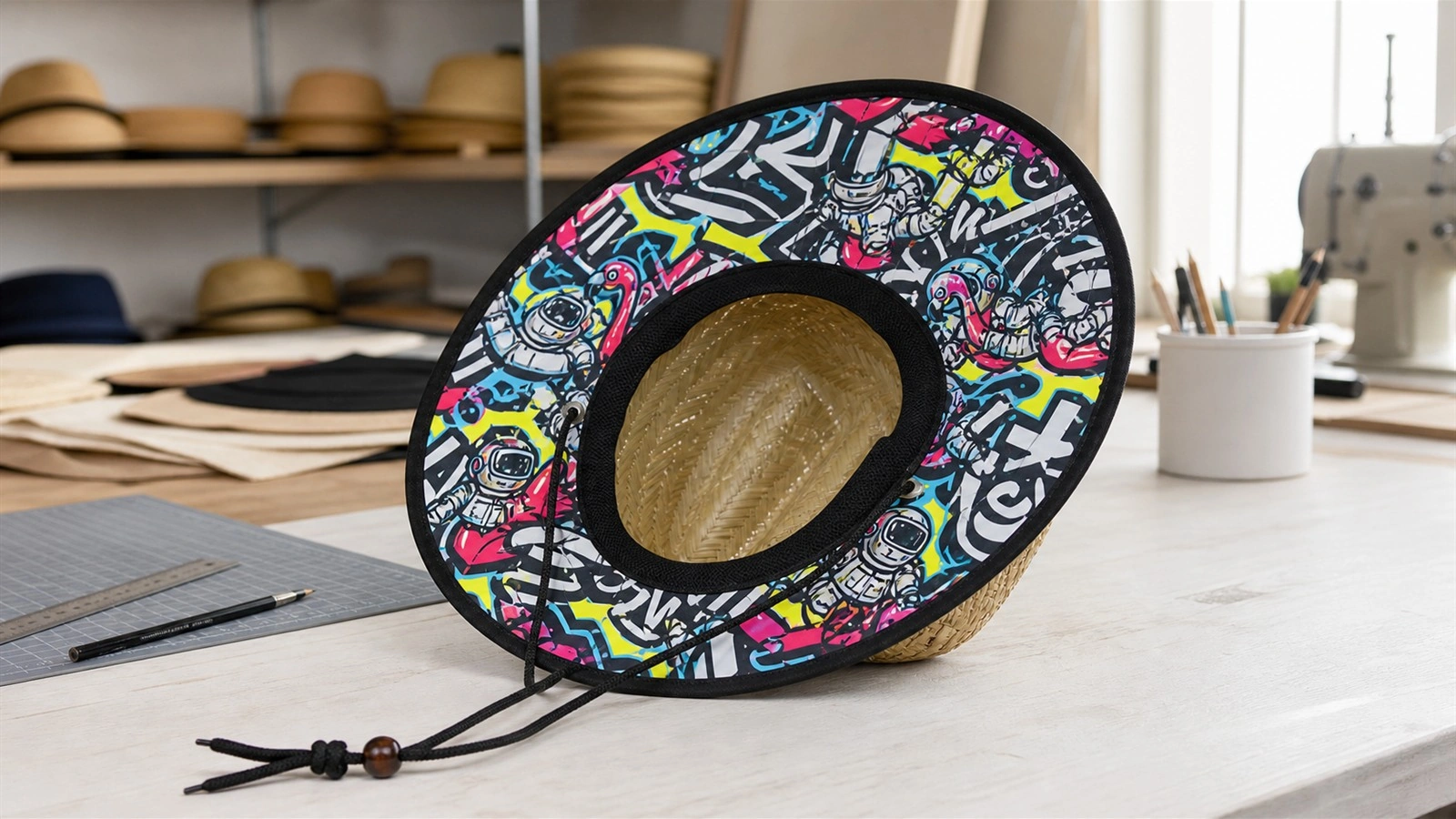
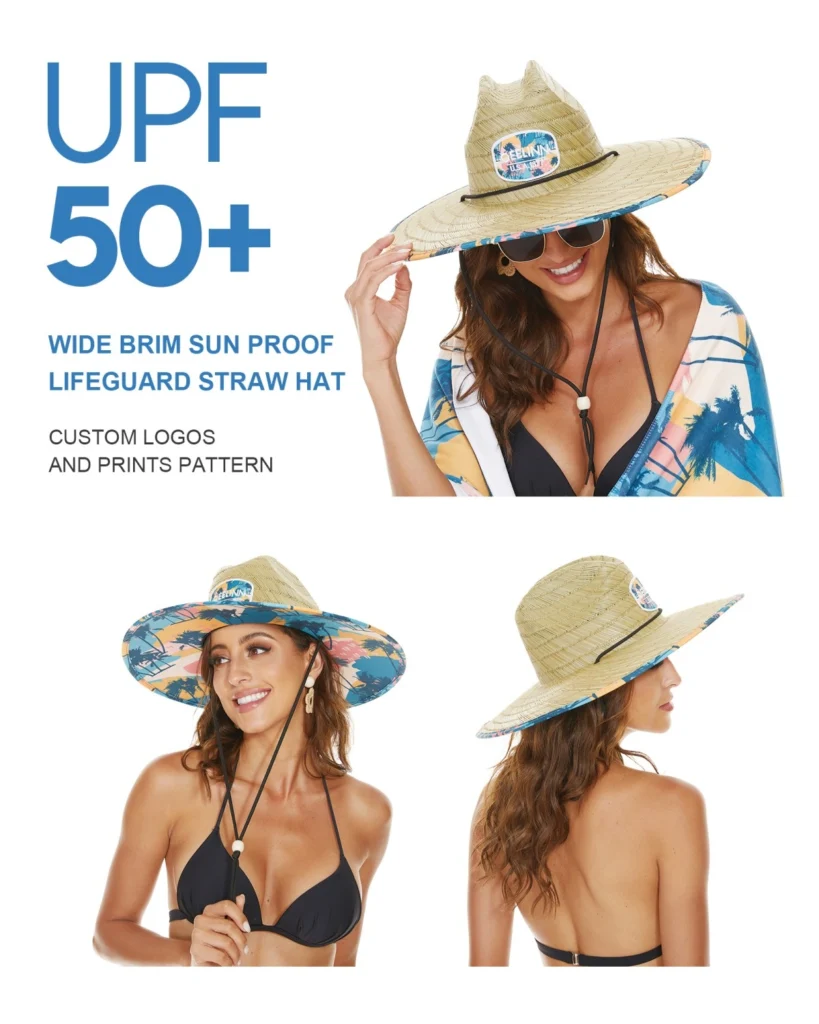
Common pitfall: A buyer selects an open-weave natural straw hat, adds a printed under-brim liner with a UPF 50+ material result, and markets the entire item as a “UPF 50+ straw hat.”
Why the evidence may fall short: The report may cover only the liner. If the straw crown remains open, unlined and untested, the finished-product wording creates a broader impression than the component evidence supports. Under the evidence principles described by the FTC and ACCC, the claim should be narrowed to the tested liner or supported by additional product-specific assessment.
Why Straw Construction Needs Extra Care
“Straw hat” is not one uniform material category. Fiber, braid, weave density, opening size, finish, reinforcement and lining can all vary. Openings may also differ across the crown and brim.
Visible light through a hat is a useful warning that the structure should not be treated like an opaque textile. It is not, however, a UPF calculation.
The Cancer Council’s sun-protective clothing guidance explains that closely woven fabrics generally provide better protection than loose or open constructions and that factors such as stretch, moisture and wear can affect protection.
Color can influence UV transmission in some materials, but dark color alone is not a rating. Neither is a printed under-brim, a marketplace badge or a supplier’s general statement. One report also does not automatically cover every style, color or production batch.
When evaluating product specifications—whether for structured lifeguard straw hats with under-brim fabric or unlined wide-brim straw sun hat styles—buyers should record silhouette, material coverage and test reports as separate specification fields.
A Buyer Workflow for Defensible UPF Claims
1. Write the public claim first
Start with the exact copy intended for the product page, hangtag or package. For example: “wide brim helps provide physical shade,” “specified liner tested to [method],” or “finished hat marketed as UPF 50+ in Australia.” The wording determines the evidence needed.
2. Mark the claimed scope
Identify on the specification whether the claim covers the straw crown, straw brim, under-brim liner, full lining, a combination of components or the entire finished hat. If only the liner has evidence, the copy must not imply that every exposed area has the same tested performance.
3. Confirm the destination market
Standards, classifications and labeling expectations differ. For Australia and New Zealand, review the current AS/NZS 4399:2020 incorporating Amendment 1:2025 requirements and applicable hat-coverage provisions. Elsewhere, confirm the relevant route instead of copying an Australian classification onto global packaging.
4. Freeze the construction
Record the material and supplier reference, weave, color, finish, liner coverage, dimensions, seams, bindings, joins and approved sample version. A substitution, new color or reduced liner area may require a new evidence review.
5. Review the full report
Check the laboratory, report number, date, tested sample, method, preparation, results and limitations. Make sure the document traces to the component or product being ordered. Do not use laboratory logos or call a laboratory a “certification partner” without permission and an accurate basis.
6. Approve evidence and sample together
The report and physical product should be linked to the same approved specification. TerraHats’ sample-policy overview outlines a framework for controlling construction before bulk production.
7. Control later changes
Purchasing, product development, compliance and marketing should use one approved evidence set. If production changes a material or marketing broadens the claim, pause publication and reassess. The TerraHats compliance and certifications page can help structure a custom-project document request; it does not state that every TerraHats hat has a UPF rating or certification.
A Claim Decision Table
| Available evidence | Appropriate public direction | Avoid |
|---|---|---|
| Brim dimensions and approved sample only | “Wide brim helps shade the face, ears and neck.” | “UPF 50+” or “98% UV protection” |
| Open-weave straw with no applicable test report | Describe material, weave and physical shade cautiously | “Natural straw provides certified protection” |
| Applicable report for the exact liner only | Identify the tested liner and limit the claim to its documented scope | Describing the entire hat as tested |
| Applicable evidence for the stated finished product and market | Use only the reviewed classification and approved wording | Broader claims covering other styles, colors or batches |
| Old, incomplete or mismatched report | Request updated evidence or remove the numerical claim | Reusing the number because the products look similar |
The FTC’s advertising-substantiation policy and ACCC guidance on false or misleading claims reinforce the principle that objective claims need an appropriate basis. The required evidence still depends on the claim, product and market.
Buyer Checklist
Before approving “UPF 50+,” confirm:
- Exact public claim and destination market
- Claimed scope: material, liner or entire finished hat
- Applicable test method and current standard designation
- Traceable report for the exact tested sample
- Match between tested and production material, color and finish
- Finished-hat coverage and design review where applicable
- Approved sample, specification and care wording
- Review of substitutions, repeat orders and additional colorways
- No unsupported certification, approval or laboratory-partnership wording
- Marketing, packaging and sales teams use the same approved claim
Frequently Asked Questions
Does every straw sun hat have a UPF rating?
No. A straw hat may create physical shade, but a numerical UPF rating should not be assumed without applicable evidence.
Does a wide brim make a hat UPF 50+?
No. Brim size influences potential shade and coverage. It does not measure UV transmission through the material.
Can a tested liner support a UPF claim?
It can support a claim limited to that liner when the report matches the production component. It does not automatically establish a rating for the straw, unlined areas or complete hat.
Is UPF 50 the same as complete UV protection?
No. UPF 50 corresponds to approximately 2% erythemally weighted UV transmission under applicable test conditions. It is not a promise of zero exposure in every wearing situation.
Can one report cover every color?
Do not assume so. Color, construction and finish may affect performance, and ARPANSA cautions that results apply to the tested sample. Confirm the report scope and any technical basis for extending the result.
Can we describe a hat as “AS/NZS 4399 certified”?
Only if an actual, applicable certification basis and approved wording support that statement. A material test report alone should not be converted into a finished-hat certification claim.
Turn the Claim Into a Product Requirement
Address UPF before finalizing the sample. Put the market, wording, claimed area, construction and document requirements into the product brief, then connect the evidence to the approved sample and production specification.
If your project requires a tested liner or a market-specific finished-hat claim, share that requirement when discussing custom lifeguard straw hats. The objective is not to place “UPF 50+” on every hat. It is to ensure that any claim used is no broader than the evidence supporting the product actually supplied.