-
WhatsApp +86 15116118247
-
Any Questions info@terrahats.com
Why Retail Packaging Must Be Planned Before Quoting

Quick Answer
Custom hat retail packaging should be planned before a private-label quotation is finalized because it changes the scope being priced. A bag, insert, hangtag, barcode, SKU label or retail pack can add materials, artwork, proofs, assembly steps, SKU-specific sorting and inspection requirements. The selected pack may also affect how many hats fit into a shipping carton and how the shipment is charged.
The quotation does not need every print file to be production-ready. It does need a defined packaging direction, quantities by SKU, responsibility for product data, required proof types and a list of open decisions. If the packaging is still uncertain, ask the supplier to quote clearly labeled alternatives instead of assuming it can be added later without commercial impact.
Key takeaway
“Individual packing included” is not a complete quotation scope. Buyers should define what the packaging must protect, present, identify and communicate—and who owns each input.
Table of Contents
Packaging Is Part of the Product Scope Being Quoted
A supplier can price only the requirements provided in the RFQ and the assumptions it records. “Custom hat with retail packaging” leaves several commercial variables unresolved:
- Is the bag a simple unit-protection layer or a printed brand pack?
- Does an insert carry care information, a brand story or channel-required data?
- Is the hangtag shared across the collection or different for every SKU?
- Who provides the final barcode numbers?
- Does each color and size need its own label?
- Will the unit be sold from a shelf, shipped through ecommerce fulfillment or packed into another retail presentation?
- Does the selected unit pack change carton dimensions or hats per carton?
These are not cosmetic details. They determine which components must be sourced, printed, checked, applied and counted. They can also determine whether one packaging component can be shared across a collection or must be produced and managed in multiple versions.
Planning packaging before quotation is a procurement control, not a requirement to finish every artwork file before requesting a price. The more variables a supplier must assume, the harder it becomes to compare quotations on the same basis.
This article focuses on what must be included, excluded or marked provisional in the quotation. Why private-label details need early approval and why wide-brim hats need packing specifications provide related planning context. Order-specific packaging structures, options and approval steps still require project confirmation.
Separate the Five Jobs Packaging May Need to Do
Packaging discussions become clearer when buyers separate five functions that are often compressed into the phrase “retail ready.”
1. Individual Product Protection
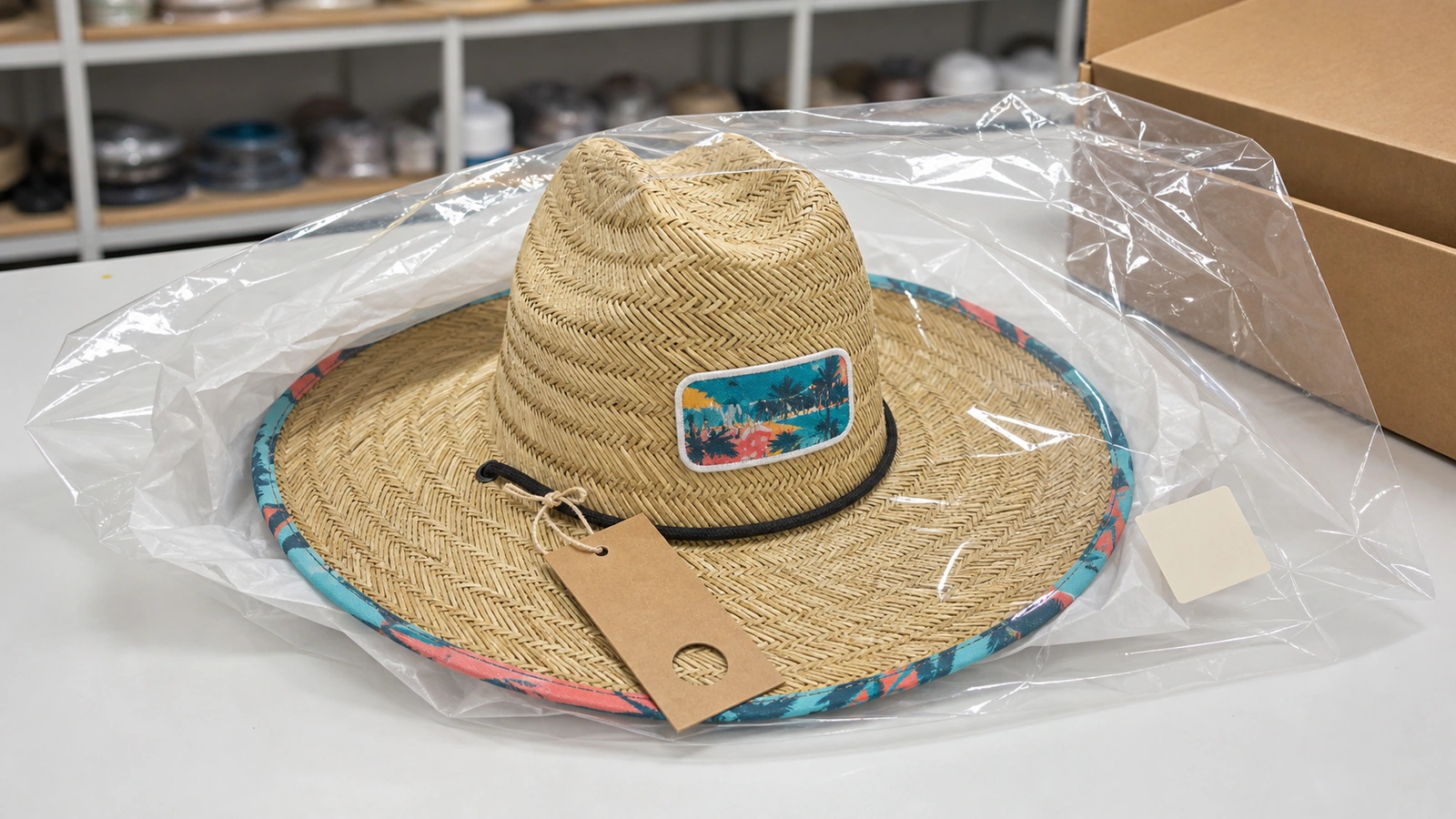
This layer helps protect one hat from dust, surface contact, loose accessories or handling during packing and distribution. It may be a bag, tissue wrap, sleeve or another order-specific solution.
Individual protection does not automatically create brand presentation, provide SKU identification or support a structured crown or brim. Those are separate requirements.
For quotation purposes, define:
- Whether every hat is packed individually
- The general packaging format and material direction
- Closure and ventilation requirements, if any
- Whether the chin cord, trim or hangtag must be positioned in a particular way
- Whether warnings or other mandatory information may apply
- Whether the pack must be reviewed with the finished hat
Do not assume that a generic bag is suitable for every destination, retailer, platform or intended user. The buyer or its compliance and channel owner must confirm applicable requirements.
2. Brand Presentation
Brand presentation may include a printed bag, sleeve, insert, belly band, gift-oriented pack or coordinated color and artwork system. Its job is to make the unit look and feel like part of the buyer’s brand.
This scope may introduce:
- Custom artwork
- Printed colors and finishes
- Dielines or layout templates
- Brand-copy review
- Print proofs or prototypes
- Assembly orientation
- Additional component sourcing
A “bag” and a “branded bag” should not be treated as the same quote line. Likewise, placing a card loosely inside a unit pack is different from folding, fastening or positioning it to a defined retail presentation.
3. SKU Identification
SKU identification helps receiving teams, stores, warehouses and fulfillment operators distinguish the correct style, color and size without opening or misreading the product.
It can involve:
- A SKU sticker
- A size or color label
- Human-readable product information
- A retail barcode
- A label on the unit pack
- A corresponding carton label
- A mapping between the product, pack and carton records
GS1 says the brand owner normally assigns the GTIN, subject to exceptions. For the RFQ, name the authorized data owner, expected number of variable versions, trade-item packaging level, placement, and required proof or verification scope. Unless an applicable GS1 exception or another authorized arrangement is confirmed, the supplier should not allocate or reuse identifiers.
4. Channel and Compliance Data
A retail or ecommerce pack may need information requested by a retailer, marketplace, importer or destination market. Examples can include product descriptors, language versions, warnings, origin information, responsible-party data, handling information or platform-specific labels.
These requirements are not universal. They depend on the product, destination, sales channel, intended user and the buyer’s commercial agreements.
The buyer—or its designated compliance, importer, retailer or marketplace owner—must confirm:
- Which information is required
- The exact approved wording and language
- Which packaging level carries it
- Who authorizes the final data
- Whether a platform template or retailer specification applies
- What evidence must be retained
A supplier can quote printing and application against supplied requirements. Printing buyer-provided content does not by itself establish legal, retailer or marketplace compliance.
5. Transport Packing
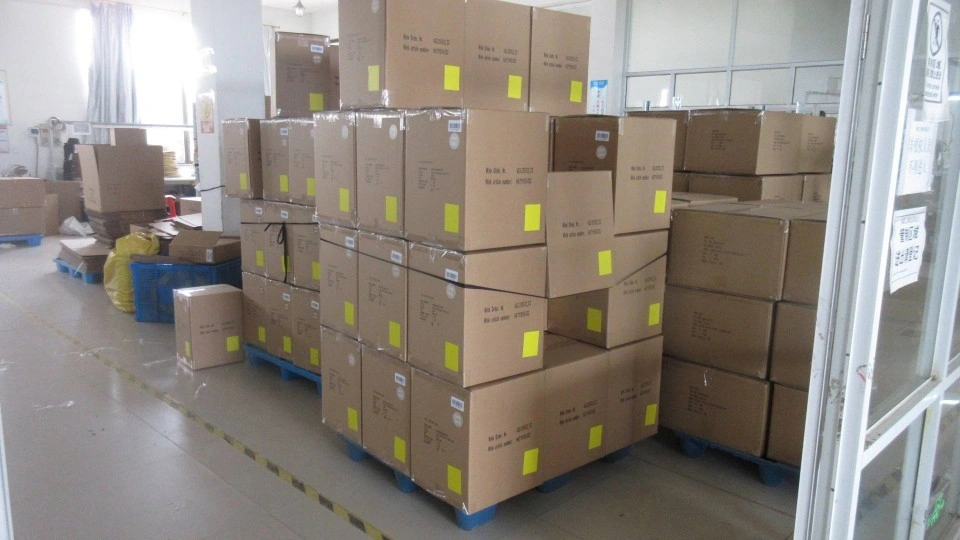
Transport packing organizes individually packed products into inner packs, master cartons, pallets or parcel-ready units. Its job is shipment handling and distribution, not retail presentation.
The quotation may need to account for:
- Hats per inner pack or carton
- Solid-SKU versus mixed-SKU cartons
- Carton-label versions
- Dividers, supports or separation
- Carton dimensions and gross weight
- Parcel, freight or fulfillment handling
- Palletization where applicable
Keep this layer distinct from the retail pack. A premium-looking unit pack may consume more carton space without providing the structural protection needed for transport. Conversely, an efficient transport carton may not be suitable for direct retail or ecommerce presentation. This article uses transport-pack data only as a quotation input; the physical packing method should be approved through the order-specific pack-out process.
How Custom Hat Retail Packaging Changes the Quotation
Component Materials and Printing
Every specified bag, insert, hangtag, sticker, label or retail pack creates a component scope. The quote should state which components are included, their proposed construction and whether printing is standard, custom or still pending review.
If the final material is undecided, request alternatives such as:
- Option A: unprinted individual protection
- Option B: branded unit packaging
- Option C: channel-specific label applied to the unit pack
The alternatives should use the same hat and assortment assumptions so the commercial effect of the packaging choice remains visible.

Artwork and Proofing
Custom-printed packaging may require artwork preparation, layout review, a dieline, color references, variable-data files or a physical prototype. Those steps can involve separate setup and approval scope even when the hat decoration is unchanged.
The quote should identify:
- Who supplies print-ready artwork
- Whether a supplier template is needed
- Which proof types are included
- Which revisions or new proofs would be separately reviewed
- Whether variable SKU or barcode files are included
- What remains excluded until data is supplied
This is different from approving every private-label detail for production. At quotation stage, the purpose is to expose the likely proof route and its commercial boundary.
Packing and Assembly Labor
Two packs using similar materials can require different handling. A hat placed in a plain bag is not the same assembly task as a hat that must be oriented, wrapped, tagged, paired with a specific insert, matched to a SKU label and placed into a branded pack.
Instead of assuming one generic “packing fee,” describe the required operations. This allows the supplier to evaluate the actual workflow without relying on a universal labor allowance.
SKU Count and Variable Versions
A five-color collection with multiple sizes can require more packaging versions than a single-SKU order, even when the total unit quantity is the same. The buyer should supply quantity by sellable variation and identify which components are:
- Shared by the entire collection
- Shared by one style or color family
- Unique to each style, color or size
- Still pending retailer or data-owner confirmation
This distinction affects print allocation, sorting, labeling and reconciliation. Do not use blank cells to mean both “same as above” and “not decided.”
Carton Allocation and Freight Inputs
Retail packaging occupies space and can change the number of units that fit into a carton. It may also change carton dimensions and gross weight.
FedEx, UPS and DHL explain that carrier charges can depend on actual weight or dimensional/volumetric weight, subject to the service and shipment rules. The exact calculation method, divisor, rounding treatment and applicable rate can change by provider, route and service, so they should be confirmed through the current carrier or freight quotation.
For supplier comparison, request the proposed:
- Hats per carton
- External carton length, width and height
- Gross weight
- Solid-SKU or mixed-SKU arrangement
- Pack-out assumptions used for those values
This does not require one final carton specification at the first inquiry. It does require enough information to avoid comparing a compact bulk-pack quote with a larger retail-ready configuration as though their shipping inputs were identical.
Hypothetical comparison: How a retail display box can change chargeable weight per hat
This simplified illustration uses a hypothetical volumetric divisor of 6,000 cm³/kg. It is not a TerraHats packing specification or carrier quotation.
Option A — Simple nested packing
- 48 hats per carton
- Carton: 60 × 40 × 40 cm
- Actual weight: 6 kg
- Volumetric weight: 60 × 40 × 40 ÷ 6,000 = 16 kg
- Allocated chargeable weight: 16 ÷ 48 = 0.33 kg per hat
Option B — Individual rigid display boxes
- 24 hats per carton
- Carton: 60 × 40 × 55 cm
- Assumed actual weight remains below volumetric weight
- Volumetric weight: 60 × 40 × 55 ÷ 6,000 = 22 kg
- Allocated chargeable weight: 22 ÷ 24 = 0.92 kg per hat
Commercial signal: The allocated chargeable weight rises from about 0.33 kg to 0.92 kg per hat—an increase of approximately 175% caused by the packaging scenario alone. The final freight price will not necessarily rise by exactly 175%; carrier divisor, rounding, service, route, rate tiers and surcharges still need a current quotation.
Packaging Component Matrix: Proof, Owner and Quote Scope
Use this matrix before suppliers finalize a quotation. Record which inputs are confirmed, provisional or excluded, and which proof or evidence activities the price is expected to cover. “Owner” means the party responsible for providing or authorizing an input; it does not automatically mean that party performs production.
| Component | Primary job | Inputs needed for quotation | Proof or evidence scope to allow for | Input owner to name in the RFQ |
|---|---|---|---|---|
| Individual bag or wrap | Unit protection and handling | Format, material direction, size basis, closure, quantity, printing, warnings if applicable | Material reference, dimensions and fit review as agreed | Buyer product team + supplier; buyer compliance owner for required wording |
| Brand insert or care card | Brand communication or product information | Finished size, stock, print sides, artwork, languages, placement and SKU scope | Artwork proof; printed proof or assembled sample where needed | Brand/marketing + compliance owner |
| Hangtag | Retail presentation and product data | Size, stock, finish, hole, fastener, attachment, artwork and variable fields | Print proof and attachment review | Brand/merchandising + product team |
| Barcode | Machine-readable trade-item identification | Final identifier owner, symbol type, size, placement, SKU mapping and channel specification | Data check, artwork proof and agreed barcode-verification evidence | Brand data owner or authorized identifier owner |
| SKU or size label | Human-readable assortment identification | Product name, style, color, size, internal SKU, label format and application point | Controlled data file and applied-label sample or photo | Buyer merchandising/data + warehouse or retailer owner |
| Retail pack | Shelf, gift or branded unit presentation | Structure, materials, dimensions, artwork, closure, orientation, included components and quantity | Dieline, artwork proof, prototype and product-fit review as applicable | Brand/packaging + supplier |
| Ecommerce handling label or pack | Fulfillment identification and distribution handling | Platform, fulfillment route, label template, placement, prep instructions and unit configuration | Channel-approved data/artwork plus route-appropriate review or testing if required | Buyer ecommerce/channel owner |
| Inner pack | SKU grouping and handling | Units per inner, assortment rule, label fields and packaging materials | Pack-out proposal or sample as agreed | Buyer logistics + supplier |
| Master carton and carton label | Transport, receiving and carton identification | Units, assortment, dimensions, weight, marks, label fields and route | Carton-mark proof, packing record and order-specific validation where required | Buyer logistics/importer + supplier |
No owner assignment should be copied blindly from this example. Record the named person or function responsible for the actual project.
Retail and Ecommerce Packaging Are Not One Universal Standard
“Ecommerce ready” may refer to shipment from the brand’s warehouse, marketplace fulfillment, store inventory later shipped online, retailer distribution or a product intended to ship in its own packaging. Each route can create a different quotation scope for labels, unit protection, preparation and validation.
At RFQ stage, identify:
- Whether the unit ships inside another parcel or in its own packaging
- The retailer, platform or fulfillment specification that applies
- Who confirms the current preparation and labeling requirements
- Whether testing or another validation step must be included
- Whether cartons move through parcel, palletized or store-distribution handling
Amazon’s Ships in Product Packaging program and ISTA procedures are examples of route-specific frameworks, not universal instructions for every hat order. The buyer’s channel owner should confirm the applicable requirements; the supplier can then quote the requested materials, assembly, proofing and validation scope.
What to Send in a Retail-Packaging RFQ
A useful RFQ does not need to hide uncertainty. It should distinguish confirmed requirements from proposed directions and pending decisions.
Product and Assortment
- Hat style or product reference
- Quantity by style, color and size
- Internal SKU for each sellable variation
- Finished-product dimensions or current sample status
- Decoration, trim and loose-accessory details that affect packing
- Whether any components are shared across SKUs
Sales Channel and Destination
- Destination country or market
- Retailer, marketplace or fulfillment model
- Store, wholesale, ecommerce or hybrid sales route
- Intended user group where relevant
- Buyer contact responsible for channel requirements
- Buyer or adviser responsible for compliance content
Individual Protection
- Whether every unit requires a bag, wrap, sleeve or other protection
- Proposed material and closure direction
- Printing requirement
- Product orientation inside the pack
- Required warning or handling copy, pending buyer confirmation where necessary
- Whether a packed sample or fit review is required
Brand Presentation
- Branded bag, sleeve, band or retail-pack direction
- Insert, care card or brand-story card
- Hangtag construction and attachment direction
- Artwork availability and file owner
- Color references, languages and print finishes
- Proof, prototype or assembled-sample requirement
SKU and Barcode Data
- Number of sellable SKU variations
- Final owner of GTINs or channel identifiers
- SKU-to-identifier mapping status
- Barcode location and packaging level
- Human-readable product, color and size fields
- Variable-data file format
- Required print or verification evidence
Retailer, Platform and Compliance Inputs
- Applicable retailer or marketplace packaging guide
- Required templates, label formats or routing instructions
- Destination-market text and language requirements
- Responsible party for final wording
- Required documents or tests
- Items still pending confirmation
Transport and Quote Comparison
- Individual-pack dimensions if known
- Proposed units per inner and master carton
- Solid-SKU or mixed-SKU carton rule
- Required carton-label fields
- Requested external carton dimensions and gross weight
- Distribution route and handling model
- Incoterm or delivery boundary to be quoted
- Packaging scope to be itemized separately
- Alternative packaging options requested
Commercial Clarifications
Ask the supplier to state:
- Which packaging components are included
- Which artwork, setup, proofing or prototype work is included
- Which assembly and label-application steps are included
- Which assumptions were used for unresolved requirements
- Whether quantities apply across the order or by component version
- Which costs or schedule effects require confirmation after final specifications
- Which changes would trigger a revised quotation
- Which packing and freight data remain estimates
If packaging remains open, write “quote alternatives” instead of leaving the field blank. A documented assumption can be reviewed and repriced; an unstated assumption weakens supplier comparison and change control.
Carry the Quoted Scope into Sampling
Use the RFQ checklist and component matrix above to compare suppliers against the same assumptions. Once an option is selected, carry its included components, exclusions, proof scope, carton inputs and open decisions into sampling. Any later change should receive commercial review before production release.
Common Quotation Mistakes
Red Flag 01 — Asking for “Standard Retail Packaging”
There is no single retail-packaging format suitable for every brand, hat, retailer and destination. Describe the required functions and ask the supplier to state its proposed construction.
Red Flag 02 — Giving Only the Total Order Quantity
The total does not reveal how many hangtag, barcode, size-label or retail-pack versions are required. Quote quantities by SKU and identify shared components.
Red Flag 03 — Treating the Barcode as Supplier Artwork
The supplier may place and print an authorized identifier, but the responsible buyer-side data owner should control number allocation and SKU mapping unless another authorized arrangement applies.
Red Flag 04 — Sending Channel Requirements After the Quote
A new retailer template, marketplace label or ecommerce handling rule can alter materials, artwork, application and proofing. Mark the requirement pending and request a conditional quote if the channel decision is not final.
Red Flag 05 — Comparing Unit Prices Without Carton Data
A retail pack may alter shipment volume even if its component price appears small. Compare carton dimensions, gross weight and units per carton using the same logistics basis.
Red Flag 06 — Assuming Unit Protection Equals Transport Protection
A bag can help with surface cleanliness and SKU organization without supporting the brim, crown or carton load. Keep unit protection and transport packing as separate quote lines.
Red Flag 07 — Finalizing the Pack Before Testing It with the Product
A layout may look correct on screen but fit poorly around the finished hat, tag or trim. Include the required fit review or prototype in the quotation, then approve the actual scope during sampling.
Frequently Asked Questions
Do I need final packaging artwork before requesting a quote?
Not always. A preliminary or conditional quotation can use a defined format, dimensions or reference, print direction, expected number of versions and proposed proof route. The supplier should state the remaining assumptions and what must be confirmed before final pricing or production release.
Can retail packaging be added after the hat price is agreed?
It can be reviewed, but it may require a revised quotation. Added packaging can change component materials, artwork, setup, assembly, inspection, carton allocation and shipping inputs.
Who should supply the barcode information?
GS1 says the brand owner normally assigns the GTIN, subject to exceptions. The project should name the authorized data owner and provide a controlled SKU-to-identifier mapping. The supplier should quote placement, printing and verification against that supplied data.
What does “retail-ready packaging” include?
It must be defined for the actual project. It may include individual protection, brand presentation, hangtags, inserts, SKU labels, barcodes or retailer data. It does not automatically include transport protection, marketplace approval or legal compliance.
Why should I request carton dimensions when discussing retail packaging?
A packaging change can increase carton volume or reduce units per carton, affecting the logistics basis used to compare quotations. Request order-specific carton dimensions, gross weight and units per carton, then apply the current carrier or freight rules.
Request a Private-Label Packing Review
Before comparing quotes, send the product reference, assortment by SKU, destination market, sales channel and the packaging component matrix your team currently has—even if some fields are marked pending.
Include the proposed bag, insert, hangtag, barcode, SKU label, retail pack and ecommerce handling requirements in your TerraHats inquiry so the requested quotation scope is explicit. Packaging availability, quotation effects, proofing and any testing scope must be confirmed for the actual project. Final market, retailer and platform requirements remain the responsibility of the buyer or its designated compliance and channel owners.
Review private-label straw hat options, see how samples can support packaging review, or plan the wider wholesale order.
Submit your packaging requirements for project review
Sources and Further Reading
- GS1 — Who Is Responsible for Numbering Trade Items?
- GS1 — GTIN Management Standard
- GS1 — New Product Decision Support
- GS1 — Global Data Model Attribute Implementation Guide
- Amazon — Ships in Product Packaging
- ISTA — Test Procedures
- FedEx — What Is Dimensional Weight?
- UPS — Shipping Dimensions and Weight
- DHL — Weight and Dimensions