
Why 16mm Became Popular and When a Brand Should Still Choose 14mm
A factory view on why 16mm paddles became popular, when 14mm still fits a brand, and how thickness should match buyer, channel, and QC.

Many pickleball paddle buyers now treat 16mm as the safe starting point.
It appears often in carbon fiber paddle listings, control-oriented product pages, thermoformed paddle discussions, foam-core projects, and premium private-label briefs. For a new brand, that makes 16mm sound like the obvious answer: thicker core, more stable feel, more control language, more comfort, and a product story that feels current.
That popularity is real. A 16mm control pickleball paddle can be a strong SKU when the buyer wants stability, comfort, placement, and a more forgiving performance story. VortexPaddle’s local product archive also supports several 16mm-related directions, including thermoformed carbon fiber references, PP honeycomb core references, edgeless structures, Gen 4 foam core options in 14mm / 16mm, and power-oriented carbon fiber options.
But 16mm should not become a reflex.
For B2B buyers, the better question is not “Is 16mm better than 14mm?” It is “Which thickness gives this brand the clearest product role, target buyer fit, channel story, sample feedback, and repeatable production standard?”
Sometimes the answer is 16mm. Sometimes a brand should still choose 14mm.
Table of Contents
The Factory View: Thickness Is a Product Decision, Not a Trend Vote
Thickness affects how a paddle is positioned, sampled, inspected, packaged, and explained.
In simple market language, 16mm is often associated with a more stable, control-oriented, forgiving paddle feel. 14mm is often associated with a quicker, more direct, and sometimes more power-oriented response. Those are useful starting assumptions, but they are not complete product rules.
The same thickness can feel different depending on surface material, core structure, shape, handle length, weight range, balance, edge construction, grip, thermoformed or cold-pressed process, and the exact sample standard. A 16mm carbon fiber paddle, a 16mm Gen 4 foam core paddle, and a 16mm cold-pressed fiberglass paddle should not be treated as the same product only because they share one number.
That is why thickness belongs in a product brief, not just in a copied spec sheet.
For a pickleball paddle manufacturer, the thickness question should connect to:
- Target buyer level.
- Product role in the brand line.
- Control, power, comfort, or all-around positioning.
- Sales channel and price tier.
- Surface material and core structure.
- Shape, handle length, and weight range.
- Packaging protection and inspection method.
- USAPA-ready development needs for eligible specifications.
When those details are clear, 14mm vs 16mm becomes a useful development decision. When they are not clear, the number can mislead the buyer.
Why 16mm Became Popular
16mm became popular because it solves several product-positioning problems at once.
For many brands, especially newer private-label brands, 16mm sounds easier to explain than a thinner technical paddle. It gives the product page a clear control and stability story. It also fits the way many buyers talk about comfort, sweet spot, and confidence, even when they are not deeply technical players.
That makes 16mm useful for a wide range of B2B projects:
- A control pickleball paddle for players who want placement and confidence.
- A premium carbon fiber pickleball paddle with a more forgiving product story.
- A thermoformed paddle where the brand wants a modern performance SKU.
- A Gen 4 foam core pickleball paddle where 14mm / 16mm options are both available.
- A club, school, or retailer program where comfort and easier adoption matter.
- A private-label Amazon SKU where the product page needs a simple performance explanation.
16mm also became a common reference point because it can reduce buyer anxiety during sampling. A thicker control-oriented sample often feels less risky to buyers who are comparing multiple factories or trying to avoid a paddle that feels too sharp, too thin, or too demanding for broad users.
That does not mean every 16mm paddle is automatically easier to sell. It means 16mm gives brands a familiar starting story.
16mm vs 14mm: The Practical B2B Difference
| Decision Area | When 16mm Often Fits Better | When 14mm May Fit Better |
|---|---|---|
| Product role | Control SKU, comfort SKU, all-around premium SKU, broad adoption SKU | Power SKU, faster-feel SKU, advanced-player SKU, sharper response SKU |
| Buyer profile | Buyers who value stability, confidence, and easier handling | Buyers who want quicker response, more direct feedback, or a thinner paddle story |
| Channel | Retail, clubs, schools, broad wholesale, Amazon listings that emphasize control | Performance-focused Amazon listings, premium niche lines, advanced-player retail, speed-oriented product stories |
| Product page message | Control, forgiveness, comfort, consistency, confidence | Speed, pop, power, agility, fast hands, aggressive play |
| Sampling goal | Confirm stability, comfort, weight range, surface, and buyer-friendly feel | Confirm responsiveness, balance, power, edge feel, and whether the target buyer accepts the thinner build |
| Risk to manage | Product may feel too muted or too similar to other 16mm listings if the story is generic | Product may feel too firm, fast, or narrow for broad beginner or club programs |
| SKU strategy | Strong hero SKU or safe first SKU for many brands | Strong differentiation SKU when the brand knows its buyer well |
The key is not to treat 16mm as premium and 14mm as secondary. Both can be premium if the product role is clear.
Why 16mm Works Well for Control Positioning
Control is one of the easiest stories to connect with 16mm.
When a buyer wants a paddle positioned around placement, stability, and confidence, 16mm gives the sales team a simple feature anchor. It can support product language around a more controlled feel, a steadier response, and a user-friendly performance profile.
That is why 16mm often fits:
- Control pickleball paddles.
- Carbon fiber pickleball paddles for broad performance buyers.
- Premium starter-to-intermediate product lines.
- Club or school programs where player levels vary.
- Retail SKUs that need a simple product ladder.
- Amazon listings where “control” is part of the buyer promise.
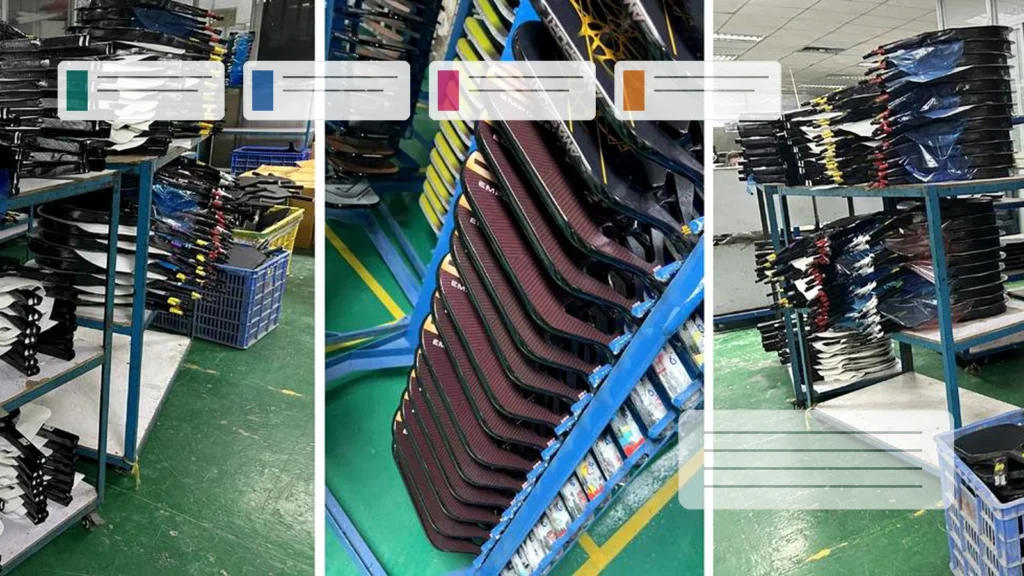
VortexPaddle’s archive includes a 16mm control pickleball paddle direction with thermoformed construction, PP honeycomb core, edgeless design, a T700 carbon fiber surface reference, and 13mm / 16mm thickness options in the source data. The archive note recommends using 16mm as the primary product title for the control page, while mentioning 13mm only if the factory offers it.
That is a good example of how thickness supports positioning. The number is not floating by itself. It connects to control, carbon fiber, process, edge structure, and product-page intent.
Why 16mm Can Also Support Premium and Foam-Core Stories
16mm is not only a control-page number. It can also support a premium material or technical construction story when the rest of the paddle brief supports it.
For example, a thermoformed carbon fiber pickleball paddle can use 16mm as part of a premium hero SKU. A Gen 4 foam core pickleball paddle can offer 14mm / 16mm options so a buyer can compare feel, response, comfort, and product positioning during sample review. A power carbon fiber paddle may still use 16mm if the structure, balance, surface, and buyer promise support the performance direction.
This is where brands need to be careful.
If every product page says the same thing about 16mm, the SKU becomes generic. A 16mm control paddle should not sound exactly like a 16mm power paddle or a 16mm foam-core paddle. The thickness may be shared, but the buyer promise should change.
A better product line might use:
- 16mm control paddle as the stable, confidence-focused hero SKU.
- 14mm power paddle as the faster, more direct supporting SKU.
- 14mm / 16mm Gen 4 foam core samples as a comparison set for advanced buyer testing.
- A value-oriented fiberglass or cold-pressed SKU for broader programs.
That creates a real product ladder instead of a catalog filled with the same thickness story.
When a Brand Should Still Choose 14mm
14mm still matters because some buyers do not want the safest or softest-feeling paddle story. They want a faster, more responsive, more direct product.
A brand should consider 14mm when the product is meant to feel quicker in hand, support a power-oriented story, or stand apart from the many 16mm control-style listings in the market. It can be especially useful when the target buyer already understands paddle differences and wants a more specific playing profile.
14mm may fit when:
- The product is positioned around power, pop, speed, or fast response.
- The target buyer is more experienced and accepts a firmer feel.
- The brand wants a sharper alternative to a 16mm control SKU.
- The product line needs clear separation between control and power models.
- The sales channel rewards performance differentiation more than broad comfort.
- The brand is testing advanced-player feedback instead of only beginner adoption.
- The factory can control thickness, weight range, balance, and surface consistency in bulk production.
The local archive supports 14mm as a real development option, especially in thermoformed, Kevlar / special-material references, Gen 3 / Gen 4 and foam-core directions, and certain edgeless references. Some entries require factory confirmation before strong claims are used, so the correct approach is to sample and verify rather than overstate.
That is the right posture for 14mm: intentional, tested, and connected to a clear buyer.

14mm Should Not Be Chosen Only to Be Different
Choosing 14mm just because competitors use 16mm is not enough.
The buyer must be able to explain why the thinner paddle exists in the line. If the product page cannot clearly state the benefit, sales teams may struggle. If the target customer expects a stable control paddle, 14mm may feel too specific. If the weight and balance are not controlled well, the paddle may not deliver the intended faster response in a repeatable way.
14mm works best when the brand can answer these questions:
- Who is the thinner paddle for?
- Is it a power SKU, fast-hands SKU, advanced-player SKU, or supporting SKU?
- How will it be different from the 16mm model?
- Which surface and core structure support the promise?
- What weight range and balance feel should the factory target?
- How will sample feedback be judged?
- What must remain consistent in bulk production?
Without those answers, 14mm can become another trend choice, just in the opposite direction.
Do Not Make Thickness Carry the Whole Product Story
One of the biggest mistakes in paddle planning is asking one number to do too much.
16mm does not automatically mean control. 14mm does not automatically mean power. Those are useful market associations, but real product performance and buyer perception depend on the complete specification.
The product brief still needs:
- Surface material: carbon fiber, fiberglass, Kevlar, T700, or another supported surface.
- Core structure: PP honeycomb, foam core, foam-enhanced structure, or factory-confirmed core.
- Process: thermoformed, cold pressed, or another validated production direction.
- Shape: standard, elongated, edgeless, long handle, or another mold.
- Weight range: approved as a realistic bulk-production range, not only one sample weight.
- Handle and grip: matched to buyer comfort and channel expectations.
- Edge structure: edged, edgeless, TPU edge guard, or factory-confirmed design.
- Packaging: planned early enough to protect the selected structure.
- Compliance path: discussed before claims, artwork, and launch assets are finalized.
Thickness is important because it affects how the rest of these decisions feel and sell. It should not replace them.
Buyer Channel Should Decide the Thickness Strategy
Different channels reward different thickness choices.
| Buyer / Channel | What Usually Matters | Thickness Implication |
|---|---|---|
| Amazon seller | Clear differentiation, strong listing story, review consistency | 16mm may fit control or comfort; 14mm may fit power or faster response if the listing explains it well |
| Distributor | Easy explanation, stable reorder, broad account fit | 16mm often gives a safer story, but 14mm can work as a supporting performance SKU |
| Club or school buyer | Comfort, broad player fit, durability, budget, bundles | 16mm is often easier to position, though final choice should follow sample feedback |
| Premium brand owner | Product-line identity, technical story, sample feel | Both 14mm and 16mm can work if each SKU has a clear role |
| Retail category buyer | Tiering, packaging, shelf story, repeatable supply | Use thickness to separate control, power, value, and premium models |
| Advanced-player niche brand | Specific feel, fast response, performance language | 14mm may be worth testing as a sharper alternative to 16mm |
This is where a factory can add real value. Instead of simply quoting both thicknesses, the factory should help the buyer decide which thickness belongs in which product role.
Build a Line, Not a Thickness Debate
For many brands, the best answer is not choosing 14mm or 16mm forever. It is assigning each thickness a job.
A practical product line might look like this:
| Product-Line Role | Recommended Thickness Direction | Why It Works |
|---|---|---|
| Hero control SKU | 16mm | Easy to explain, broad buyer fit, stable control story |
| Supporting power SKU | 14mm or selected 16mm power build | Creates contrast against the control model and gives advanced buyers a clearer choice |
| Premium foam-core SKU | 14mm / 16mm sample comparison | Lets the brand decide based on sample feel, target buyer, and channel response |
| Club or school program | Usually 16mm or other comfort-oriented build | Supports broader player adoption and simpler purchasing |
| Niche advanced-player SKU | 14mm | Gives the product line a faster, more direct option if sample testing supports it |
This approach prevents the brand from turning thickness into a winner-takes-all argument. Instead, thickness becomes part of SKU architecture.
QC and Reorder Consistency Matter More Than the Number
A thickness decision is only useful if the factory can repeat it.
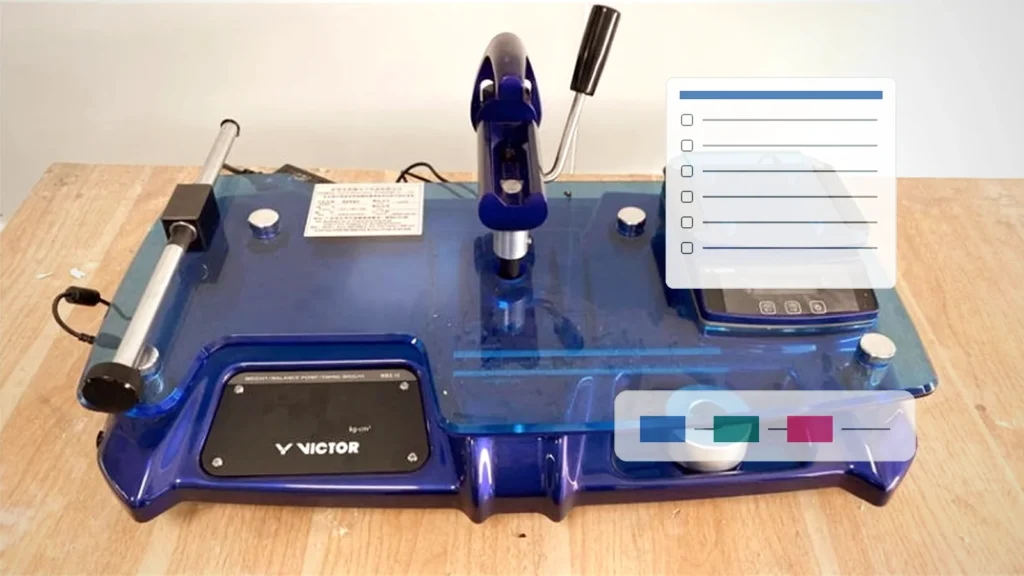
For both 14mm and 16mm paddles, buyers should define inspection standards before bulk production. The approved sample should not be treated as a vague inspiration. It should become a reference for the acceptable production range.
QC should cover:
- Thickness and dimensional consistency.
- Weight range and balance feel.
- Surface appearance and texture consistency.
- Edge finish or edge guard fit.
- Handle length, grip wrapping, and grip feel.
- Print quality and artwork alignment.
- Packaging protection for the selected structure.
- Batch inspection before shipment.
This matters because a 16mm paddle that is inconsistent across production is not safer than a well-controlled 14mm paddle. Likewise, a 14mm paddle that is not controlled well may fail to deliver the faster, more direct feel the brand wanted.
In B2B paddle manufacturing, repeatability is part of the product.
USAPA-Ready Development Should Start Before Thickness Is Finalized
Some buyers need paddles developed for USA Pickleball approval requirements. That discussion should happen before the brand finalizes thickness, core, surface, artwork, packaging, and product claims.
The USA Pickleball Equipment Standards Manual served from the official USA Pickleball site identifies paddle specifications, surface testing, size requirements, approval listing requirements, and ongoing compliance expectations. It also states that there is no restriction on paddle thickness, while other requirements such as combined length and width, maximum paddle length, surface characteristics, and approval listing still matter.
That means 14mm and 16mm are not automatically approved or disapproved because of thickness alone. The complete paddle specification, sample testing, formal submission, and public approval status matter.
VortexPaddle can support paddle development for eligible specifications and help brands prepare samples for official approval review. Final approval depends on formal submission, testing, and listing by the relevant governing body.
A Better Brief for 14mm and 16mm Sample Requests
Before asking for 14mm or 16mm pickleball paddle samples, buyers should prepare a brief that connects thickness to product strategy.
The brief should answer:
- Who is the target buyer?
- Is the paddle a control SKU, power SKU, all-around SKU, club program, retail SKU, or premium hero product?
- Which channel will sell it?
- Should the product page emphasize control, power, speed, comfort, spin, value, or custom branding?
- Which surface material should be tested?
- Which core structure is confirmed by the factory?
- Should the sample be thermoformed, cold pressed, foam core, or another construction direction?
- What shape, handle length, edge style, and grip should be used?
- What weight range should the sample target?
- Does the project need USAPA-ready development support using eligible specifications?
- What QC checkpoints must be repeated in bulk production?
This brief helps the factory compare 14mm and 16mm in a meaningful way. It also makes sample feedback cleaner because each sample is judged against the role it is supposed to serve.
The VortexPaddle Point of View
16mm became popular for good reasons. It gives many brands a clear control, stability, comfort, and confidence story. It can be a strong first SKU, a premium carbon fiber paddle, a control-oriented paddle, or a useful option in foam-core sample development.
But 16mm is not automatically the best choice for every brand.
14mm still deserves a place when the brand wants a faster, more direct, more power-oriented, or more differentiated paddle. It can be the right supporting SKU, the right advanced-player product, or the right sample direction when the buyer wants something sharper than a broad 16mm control story.
The better factory conversation is not:
“Should we choose 14mm or 16mm?”
It is:
“Which thickness helps this SKU succeed with this buyer, channel, product promise, and reorder plan?”
That question leads to better samples, cleaner product pages, stronger SKU architecture, and more repeatable bulk production.
Request 14mm and 16mm Paddle Samples
If you are deciding between 14mm and 16mm pickleball paddles, VortexPaddle can help compare thickness options before sampling.
Share your target buyer, sales channel, product role, preferred surface, core direction, process, shape, handle, packaging plan, and QC expectations. Then request samples that compare 14mm and 16mm as product strategies, not just numbers on a spec sheet.

Request 14mm and 16mm Paddle Samples
FAQ
Is a 16mm pickleball paddle always better than a 14mm paddle?
No. 16mm is often easier to position around control, comfort, and stability, but it is not automatically better. The right thickness depends on target buyer, channel, product role, surface, core, shape, weight range, and QC plan.
Why did 16mm pickleball paddles become popular?
16mm paddles became popular because they give brands a clear control and stability story. They can also feel like a safer starting point for broad buyer groups, premium carbon fiber lines, club programs, and private-label product pages.
When should a brand choose a 14mm pickleball paddle?
A brand should consider 14mm when the SKU is meant to feel faster, more direct, more power-oriented, or more differentiated from common 16mm control paddles. It works best when the target buyer and sample criteria are clearly defined.
Should a brand offer both 14mm and 16mm paddles?
Some brands should. A 16mm control SKU and a 14mm power or faster-feel SKU can create a clearer product line than forcing one thickness to serve every buyer.
Does paddle thickness affect USA Pickleball approval?
The official USA Pickleball Equipment Standards Manual served from USA Pickleball states that there is no restriction on paddle thickness. However, thickness alone does not determine approval. The full paddle specification, surface, dimensions, testing, submission, and public listing status still matter.
What should buyers include in a 14mm vs 16mm sample request?
Include the target buyer, sales channel, product role, preferred surface, core structure, process, shape, handle length, edge style, weight range, packaging plan, compliance needs, and QC checkpoints.